
The best body lotion for dry skin in 2026 is the one you will actually use daily, with barrier-repair ingredients that match how dry your skin feels and where it shows up.
If you feel tightness after showers, see ashiness on legs, or get itchy patches in winter, you do not need “more fragrance” or a trend, you need a formula that holds water in and calms irritation without feeling sticky.
This guide helps you pick the right type fast, spot the ingredients that matter, avoid common “why is this not working” mistakes, and build a simple routine that keeps dryness from coming back.
What “dry skin” usually means (and why lotion choice matters)
Dry skin is often a mix of low water content and a weak skin barrier. When the barrier leaks, moisture evaporates quickly and even normal soap can feel harsh.
According to the American Academy of Dermatology, using gentle cleansers and applying moisturizer right after bathing helps reduce dryness by supporting the skin barrier.
What matters for product choice is your main symptom:
- Tight + flaky: you likely need richer occlusives (to slow water loss) plus humectants (to pull in water).
- Itchy or reactive: simpler formulas, fewer fragrance ingredients, and barrier lipids often work better.
- Rough “bumpy” areas: you may need light exfoliating actives a few nights a week, then moisturize.
Quick self-check: which dry-skin type are you?
Most people buy the “wrong” product because they skip this step. Use this quick checklist and be honest, it saves money.
Pick the closest match
- Mild dry: tightness after shower, no cracking, flaking only sometimes.
- Moderate dry: visible flakes on arms/legs, dull look, occasional itch.
- Very dry: rough patches, frequent itch, redness, or tiny cracks.
- Dry + sensitive: stings with fragranced products, reacts to many lotions.
Body area matters
- Hands: wash frequency means you need a grippier, more occlusive texture.
- Legs: flaking often needs richer cream or a lotion + oil layering approach.
- Back/chest: if you break out, avoid heavy oils and choose non-comedogenic textures.
The ingredients that actually move the needle
If you only remember one thing, remember this: a solid formula usually combines humectants (add water) and occlusives (seal it in), with barrier lipids to reduce repeat dryness.
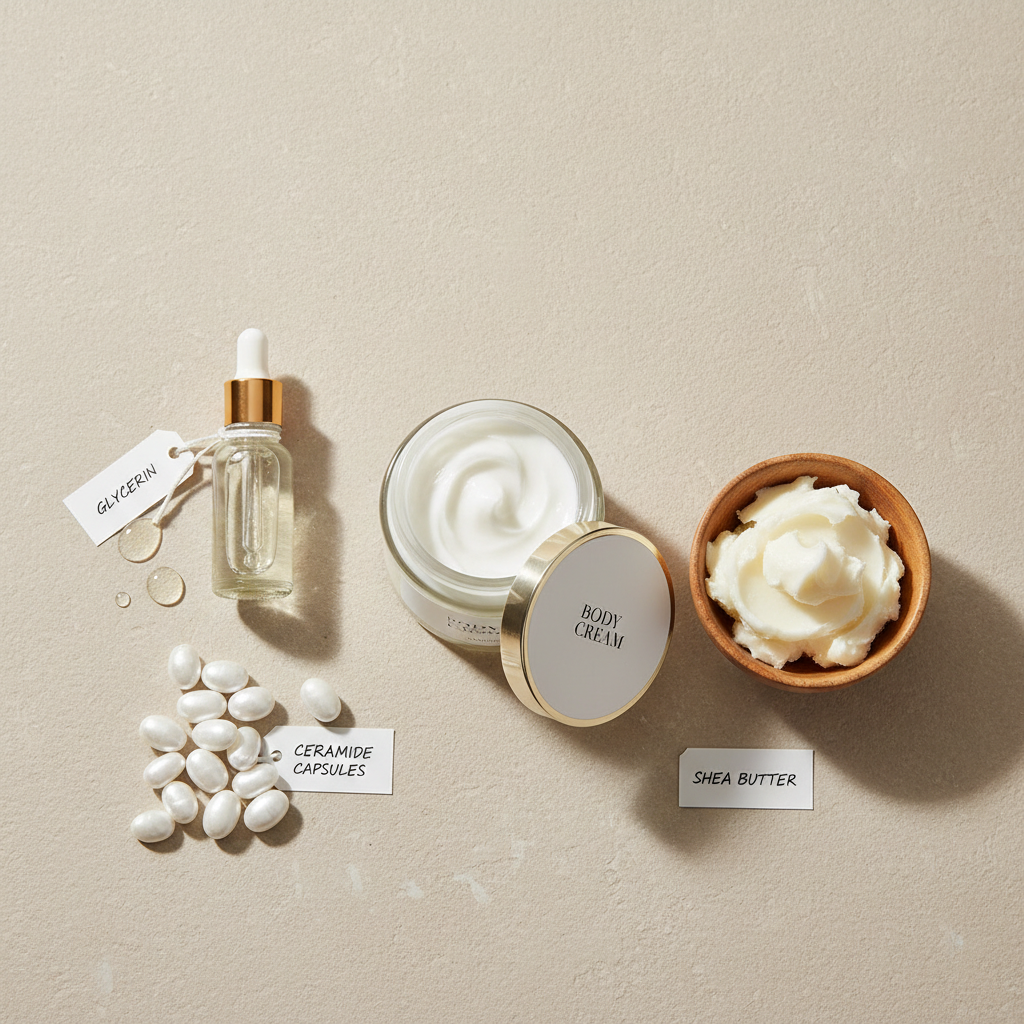
Look for these (and why they help)
- Glycerin: reliable humectant, works for most people and climates.
- Hyaluronic acid: helps bind water, often best when layered under an occlusive.
- Ceramides: barrier lipids that support “seal” function, especially helpful for recurring dryness.
- Petrolatum or dimethicone: strong occlusives, great for very dry skin or winter.
- Shea butter/squalane: emollients that soften rough feel and improve comfort.
- Colloidal oatmeal: often used for itch-prone skin; many people find it soothing.
- Urea or lactic acid (low %): can smooth rough, scaly texture, but may sting if skin is cracked.
Things to be cautious with
- Heavy fragrance: not “bad” for everyone, but more likely to irritate reactive skin.
- High-strength acids: can backfire on compromised barrier.
- Essential oils: some people tolerate them, others do not, patch test matters.
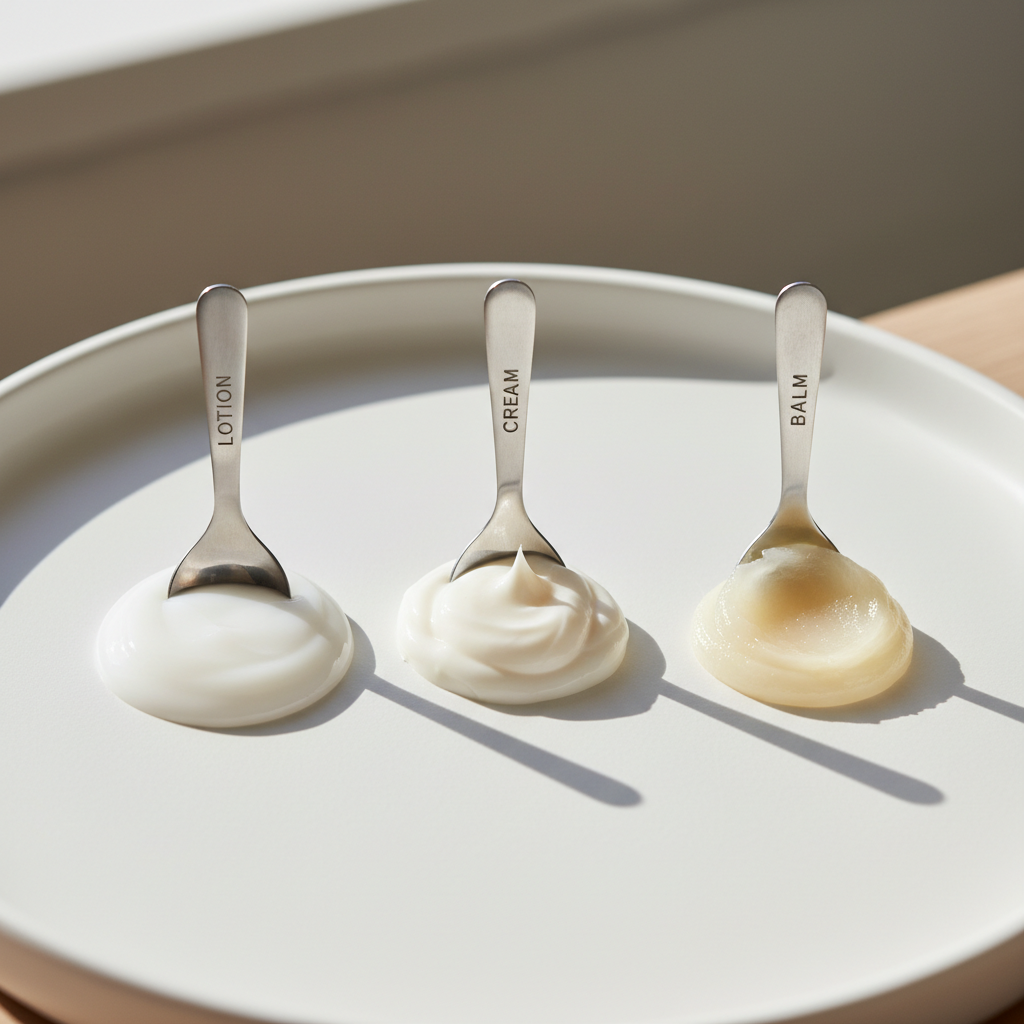
2026 buying guide: lotion vs cream vs balm (use this table)
The best body lotion for dry skin is not always the thickest jar. Texture should match your dryness level, climate, and whether you will apply it twice a day.
| Type | Best for | Pros | Watch-outs |
|---|---|---|---|
| Lotion | Mild to moderate dryness, humid climates, daytime use | Fast spread, lighter feel, good under clothing | May not be enough for very dry legs in winter |
| Cream | Moderate to very dry skin, cold or dry climates | More barrier support, longer comfort window | Can feel heavy if you over-apply |
| Balm/ointment | Very dry patches, hands/feet, overnight repair | Strong sealing, great for cracking risk | Greasy feel, better as targeted use |
Key point: if you hate the feel, you will skip it. A slightly lighter product used consistently often beats a “perfect” product used once a week.
How to get better results from any body lotion (practical routine)
This is where most routines fall apart. Moisturizer works best when you apply it at the right time and with the right amount.
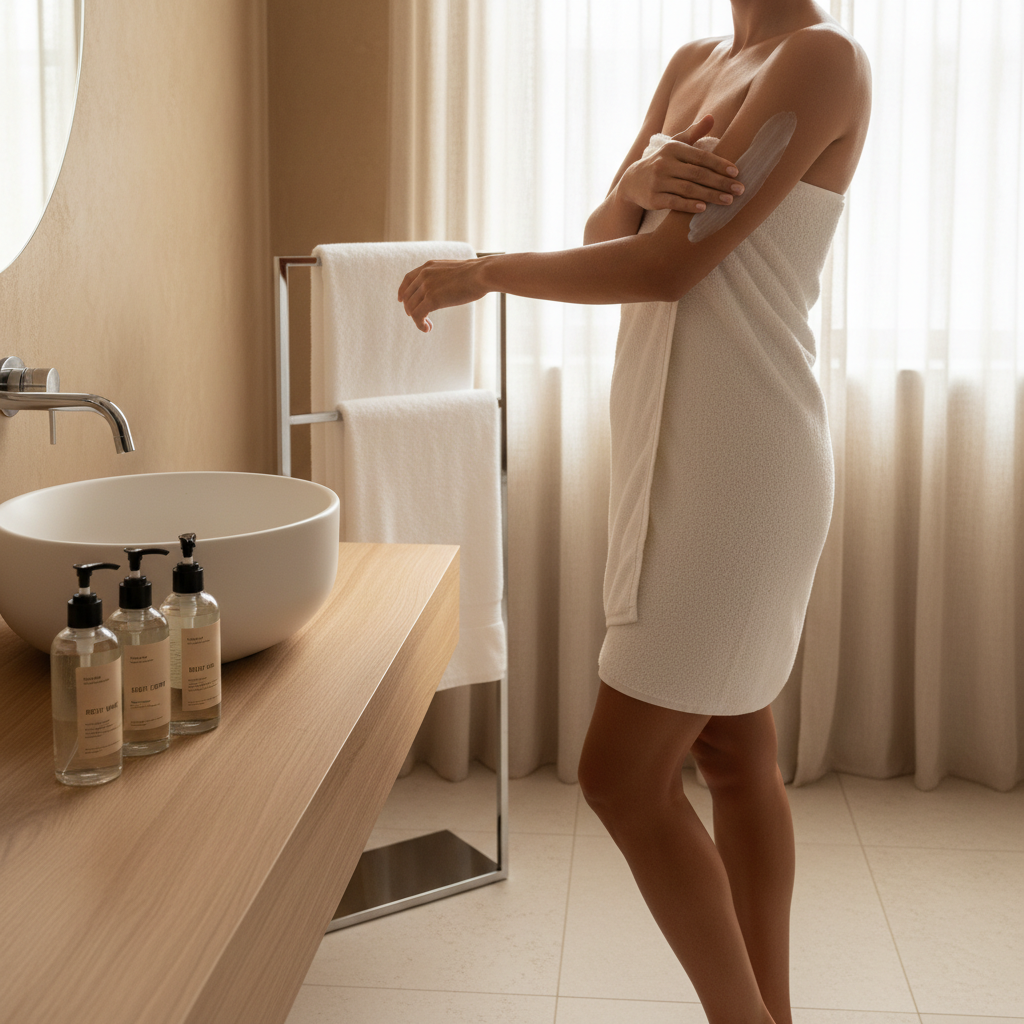
After-shower method (the 3-minute window)
- Keep showers warm, not hot, and keep them shorter when skin feels stripped.
- Pat skin until it is slightly damp, not dripping.
- Apply your body lotion from ankles upward, then do arms and torso.
- If you still feel dry in 30 minutes, add a second thin layer instead of one huge layer.
Targeted “sandwich” for stubborn areas
- Apply a lotion with glycerin/ceramides.
- On top, add a thin film of petrolatum-based ointment on elbows, shins, hands, heels.
- Do it at night if daytime greasiness bothers you.
If you are flaky but also break out
- Use a lighter lotion on chest/back.
- Keep richer cream for legs and arms.
- Change out sweaty clothing quickly; friction can worsen roughness.
Common mistakes that make “the best” lotion feel useless
A lot of “this didn’t work” reviews come from mismatch or timing, not from the product being bad.
- Applying on fully dry skin only: humectants need water to bind, damp skin helps.
- Using harsh soap daily: if cleanser strips oils, lotion has to fight uphill.
- Expecting instant repair: barrier support can take days to feel stable, sometimes longer.
- Over-exfoliating: too many scrubs or acids can increase sting and dryness.
- Ignoring environment: indoor heating and low humidity often demand a richer texture.
When you should consider professional help
If dryness crosses into persistent rash, cracking, or intense itching, it may not be “just dry skin.” According to the National Eczema Association, eczema can look like dry, itchy, inflamed skin and often needs a targeted plan.
- Dryness plus bleeding cracks, oozing, or signs of infection.
- Itch that disrupts sleep for multiple nights.
- Red patches that spread or do not improve after consistent moisturizing.
- Stinging with most products, even bland fragrance-free options.
If any of these match you, a dermatologist can help confirm whether eczema, contact dermatitis, or another condition is involved, and advise treatments that are safer for your situation.
Key takeaways (and a simple 2026 recommendation framework)
- Mild dry: lotion with glycerin + ceramides, apply after shower, reapply to hands as needed.
- Moderate dry: cream texture, add targeted ointment on shins/elbows at night.
- Very dry: cream plus balm for patches, simplify cleanser, prioritize consistency.
- Dry + sensitive: fragrance-free, fewer actives, patch test, do not over-exfoliate.
If you want a fast decision, pick the texture you can tolerate daily, then check for glycerin + ceramides and at least one solid occlusive. That combination is a reliable starting point when searching for the best body lotion for dry skin.
FAQ
- What is the best body lotion for dry skin in winter?
Most people do better with a cream, and many add an ointment just on problem spots. Winter air plus indoor heat often increases water loss, so richer textures tend to feel more comfortable. - Is body butter better than lotion for very dry skin?
It can be, mainly because body butters are often more occlusive and emollient. If you hate the feel, try using it only at night or only on legs and elbows. - Should I apply lotion before or after towel-drying?
After a quick pat-down, while skin is still slightly damp. That timing usually improves hydration and reduces the “I need to reapply in an hour” problem. - What ingredients should I avoid if lotion stings?
Fragrance, essential oils, and stronger acids are common triggers, though it varies. If stinging is frequent, patch test and consider a simpler fragrance-free formula. - Can I layer body oil over lotion?
Often yes, and it can help seal moisture, especially on legs. Use a small amount and avoid heavy oils on acne-prone areas like chest or back. - How long does it take for a moisturizer to “fix” dry skin?
Many people feel comfort quickly, but barrier stability can take days of consistent use. If nothing changes after a couple of weeks, reassess cleanser, climate, and whether irritation is involved. - Why do my legs look ashy even after lotion?
Common reasons include not applying on damp skin, using too light a texture, or needing gentle exfoliation occasionally. If you have irritation or cracking, skip exfoliation and focus on barrier repair.
If you are trying to narrow down options and want a more “no guessing” approach, start by matching texture to your dryness level, then shortlist formulas built around glycerin, ceramides, and a dependable occlusive, it is usually the most efficient path to finding the best body lotion for dry skin without buying five bottles that end up in a cabinet.