
Best hair ties for thick hair usually come down to two things: enough grip to stay put, and enough give to avoid breakage, dents, and scalp tension. If your ponytail slides by noon or your bun feels like it’s pulling your temples, it’s not “just your hair” — it’s often the wrong tie type or size.
Thick hair isn’t one category, though. Coarse straight hair, dense curls, and fine-but-dense hair all behave differently, and a tie that’s perfect for a gym ponytail can be terrible for all-day wear at work.
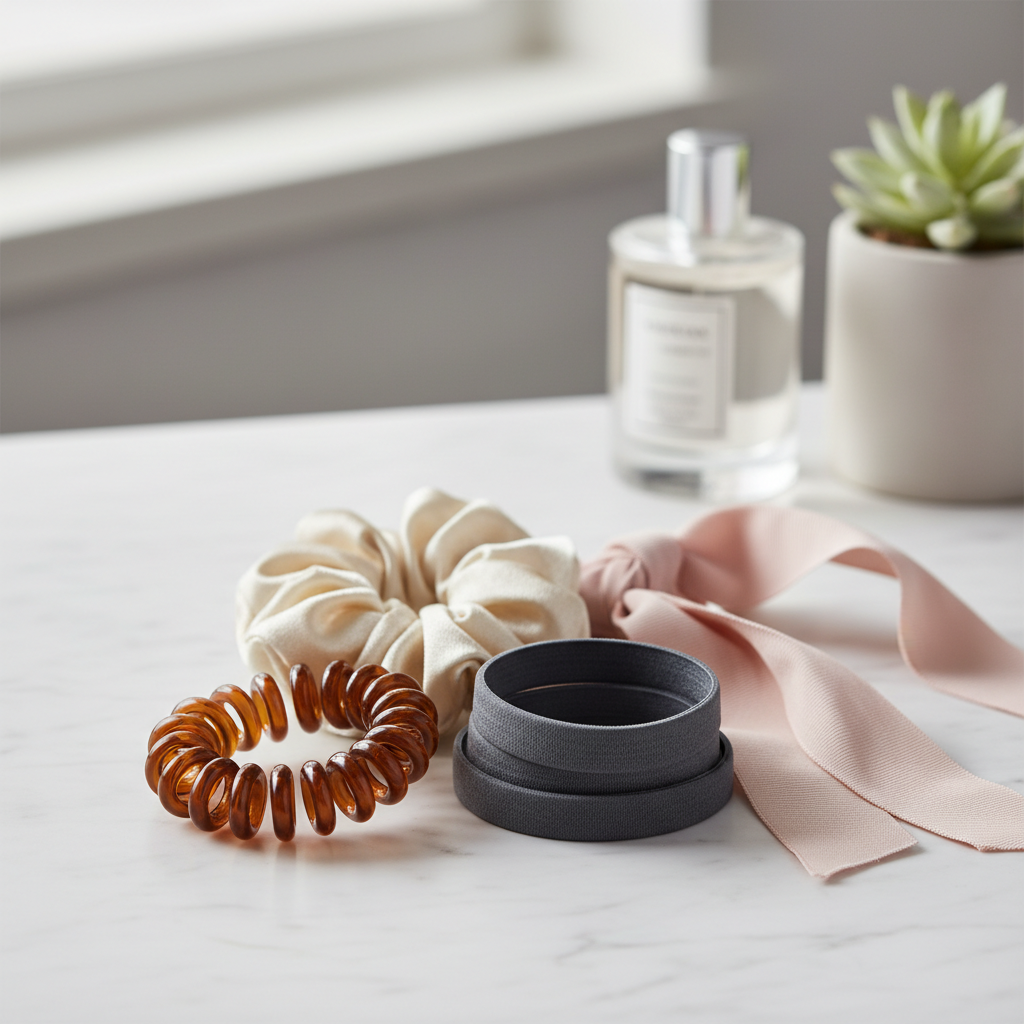
This guide focuses on practical choices for 2026: what to buy by use case, how to tell when a tie is damaging your hair, and small adjustments that make thick hair easier to manage without fighting it every morning.
What thick hair really needs from a hair tie
For thick hair, “strong” isn’t the same as “tight.” A good tie spreads tension across more surface area, so the hair stays secure without a harsh pinch point.
- High-stretch core with recovery: stretches wide enough for a full wrap, then bounces back so it doesn’t loosen in an hour.
- Low-friction outer: reduces snagging when you slide it off, especially on textured or color-treated hair.
- No exposed metal: those seams catch hair and can contribute to breakage over time.
- Correct circumference: too small forces over-tight wraps, too large means constant re-tying.
According to the American Academy of Dermatology Association, tight hairstyles can contribute to traction alopecia in some people, so it’s worth treating “secure” as a comfort-and-safety issue, not just a style preference.
Quick buying guide: best types of hair ties for thick hair (by scenario)
If you want a fast answer, pick by scenario first, then fine-tune the size. Most people get stuck because they shop by what looks cute, not by how the tie distributes tension.
All-day ponytail (work, errands, driving)
- Seamless thick elastics (no metal): reliable hold without sharp pressure points.
- Medium scrunchies: more fabric contact means fewer dents, often less headache risk.
Gym, running, high movement
- High-recovery elastics: designed for repeated stretch without getting “baggy.”
- Double-wrap strategy: one supportive tie plus a soft outer scrunchie if you need extra control with less tension.
Buns, twists, claw-clip alternatives
- Spiral coil ties: good grip and less ponytail crease, especially for medium-to-long thick hair.
- Soft fabric ties (ribbon/jersey): helpful for looser buns where comfort matters more than max hold.
Curly/coily thick hair
- Satin scrunchies: lower friction can reduce snagging and help preserve curl clumps.
- Large-diameter ties: fewer wraps needed, which often means less tension at the hairline.
A practical comparison table (pick your “best” faster)
Here’s the tradeoff most thick-hair shoppers are really deciding between: hold, comfort, and hair friendliness. Use this as a shortcut.
| Type | Hold on thick hair | Comfort | Dent risk | Best for |
|---|---|---|---|---|
| Thick seamless elastic | High | Medium | Medium | Everyday ponytails, quick styles |
| Scrunchie (cotton/velvet) | Medium | High | Low | All-day wear, less tension |
| Satin scrunchie | Medium | High | Low | Curly/coily hair, reducing snagging |
| Spiral coil tie | Medium-High | Medium-High | Low | Buns, ponytails that need grip without dents |
| Thin drugstore elastic | Low-Medium | Low | High | Backup only, not ideal for dense hair |
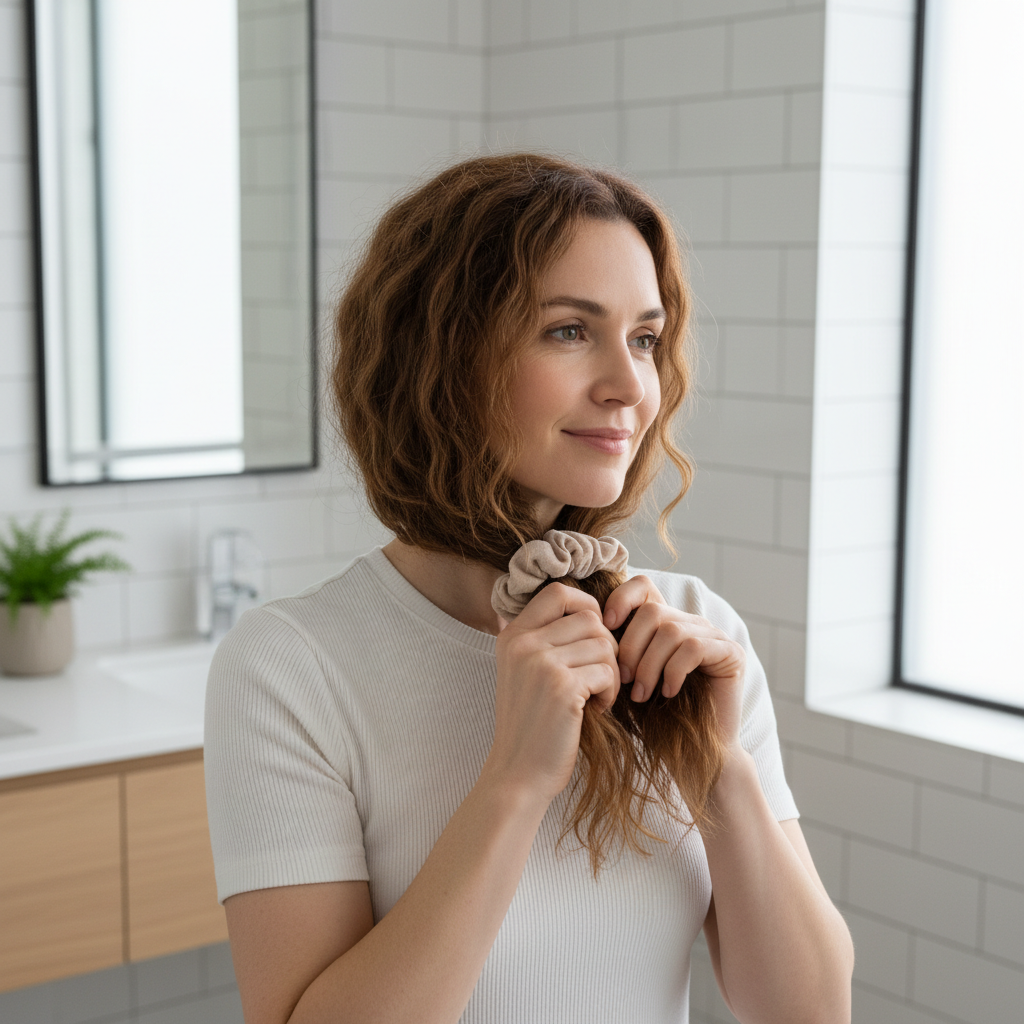
If you’re torn between two types, pick the one that lets you use one fewer wrap. In thick hair, “one fewer wrap” often means noticeably less tension and fewer broken strands around the elastic.
Self-check: are your hair ties causing damage or headaches?
A lot of thick-hair issues get blamed on shampoo or “frizz,” but your tie can be the daily stressor. Run this quick check.
- You see short snapped hairs near your crown or around the ponytail base.
- Your ponytail feels sore after a couple hours, especially at the temples.
- The elastic slides out unless you wrap 4–6 times.
- You get a sharp crease that takes hours to relax.
- You have to “rip” it out instead of sliding it off smoothly.
If two or more show up regularly, don’t just buy stronger elastics. Usually the better move is a larger diameter or a softer surface, then adjust your wrapping method.
How to choose the right size and tension (the part most people miss)
Even the best hair ties for thick hair fail if the size is off. Thick hair often needs a tie that looks “too big” in the package.
A simple fit test
- If you need more than 3 wraps for a secure ponytail, the tie is likely too small or too thin for your density.
- If it holds with 1 wrap but feels loose, the tie is too large or too slippery for your hair texture.
- If the ponytail feels secure but you feel scalp tension, you’re getting hold through tightness instead of grip.
Small technique tweaks that reduce stress
- Make the first wrap looser, then snug the second wrap for stability. This spreads tension more evenly.
- Place the tie slightly lower than your natural “high pony” spot if you get headaches.
- Rotate ponytail placement day to day, thick hair often breaks in predictable zones.
Recommendations by hair texture (straight, wavy, curly, coily)
Texture changes how a tie behaves. Straight thick hair tends to be heavier and can slip, while curly thick hair can snag if the outer material is rough.
Straight, thick, heavy
- Textured seamless elastics or grip-coated elastics (no metal) usually hold better than silky options.
- Spiral coil ties help when you want less dent but still need structure.
Wavy, thick, medium friction
- Scrunchies work well for casual hold without “triangle ponytail” bulk.
- Thicker elastics for gym days, scrunchies for desk days is a solid split.
Curly/coily, thick and dense
- Satin scrunchies or soft fabric ties can be gentler when removing.
- Consider a looser pineapple style at home, tight holds can stress edges over time.
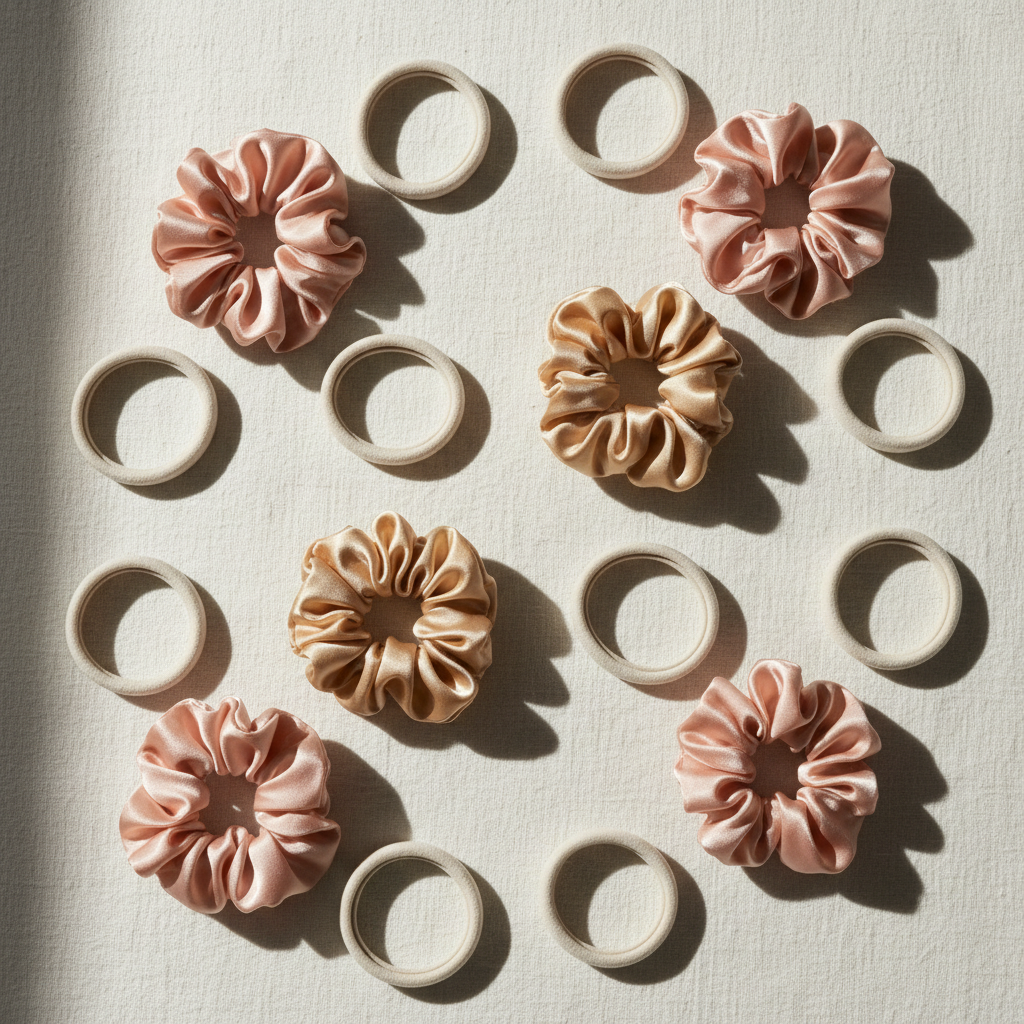
One more honest point: if your hair is both thick and very long, you may need to accept that a single tie won’t do every job. Keeping two “workhorse” options (a strong elastic and a satin scrunchie) solves most daily frustration.
Common mistakes to avoid (they’re sneaky)
- Buying ultra-tight minis because they look “stronger,” they often increase breakage and headaches.
- Using old stretched ties and compensating with extra wraps, the extra wraps are where damage happens.
- Sleeping in a tight ponytail, thick hair stays under tension longer and may tangle at the base.
- Yanking ties out, even gentle ties can snag when removed fast.
If you notice thinning around the hairline, persistent scalp tenderness, or patchy shedding, it’s smart to loosen styles and consider talking with a dermatologist or another qualified professional, since hair loss can have multiple causes.
Key takeaways + a simple 2026 shopping checklist
Most people don’t need an endless drawer of options, they need two or three that match real life. Here’s a clean checklist to use while shopping.
- Choose no-metal, seamless construction for daily use.
- Size up if you wrap more than three times.
- Use scrunchies when comfort matters, elastics when performance matters.
- Pick satin if you deal with snagging or want less friction on textured hair.
- Replace regularly once stretch recovery feels weak, don’t “make it work” with tighter wrapping.
If you want one action step today, toss the worst offender in your stash, the tie that forces too many wraps, and replace it with a larger seamless elastic plus a scrunchie for low-tension days.
FAQ
- What are the best hair ties for thick hair that won’t break strands?
Look for seamless, no-metal elastics or satin scrunchies. The material matters, but sizing matters just as much because over-wrapping is a common breakage trigger. - Are spiral hair ties good for thick hair?
Often yes, especially for buns and low ponytails where you want grip with less denting. Very heavy, long hair may still need a second tie for all-day hold. - Why do hair ties hurt my head even when they feel “not that tight”?
Pressure can concentrate at one spot, particularly if the tie is thin. Wider ties or scrunchies spread tension and can feel noticeably better. - How many wraps should thick hair need?
Many people land at two to three wraps. If you routinely need four or more, a larger diameter or higher-stretch tie usually performs better with less stress. - Do scrunchies work for thick hair at the gym?
Sometimes, but they can loosen with sweat and movement depending on fabric and elasticity. A strong seamless elastic is often more reliable for high-impact workouts. - What’s better for thick curly hair: elastics or scrunchies?
Scrunchies, especially satin, are often easier on curls when removing. For maximum hold, use a thicker seamless elastic and remove slowly to avoid snagging. - How do I stop the “pony bump” or crease?
Spiral ties and scrunchies typically reduce dents. You can also alternate ponytail height and avoid overly tight first wraps.
If you’re trying to simplify your routine, start by matching one tie to your most common day (work or gym), then add one comfort option for low-tension wear, that two-piece setup covers most thick-hair situations without overthinking it.