
women wedge sandals summer dress pairing works best when you treat the shoes as part of the outfit’s “structure”, not just a cute add-on.
If you’ve ever looked in the mirror and thought, “Why does this dress suddenly feel too casual, or weirdly heavy?”, it’s usually the wedge shape, strap style, or color temperature fighting the dress silhouette.
This guide helps you choose wedges that flatter common summer dress styles, stay comfortable in real-life settings, and avoid the usual pitfalls like slipping straps or an off balance hemline.
Why wedges and summer dresses can look amazing (or totally off)
Wedges are a shortcut to height without the “teetering” feeling many people get in stilettos, but they also add visual weight. That’s great when a dress needs grounding, and not so great when a dress already has volume.
- Wedges add base and stability, which can make floaty fabrics look intentional instead of flimsy.
- The wrong wedge can overpower a delicate print or a minimal slip dress, especially with chunky soles.
- Straps change the vibe fast, thin straps read dressier, wide straps read casual, and ankle straps can visually shorten the leg on some people.
According to the American Podiatric Medical Association (APMA), choosing supportive footwear can help with comfort for long wear, and wedges sometimes feel easier than narrow heels for walking. Comfort still depends on fit, arch support, and how you move, so it’s not a guarantee.
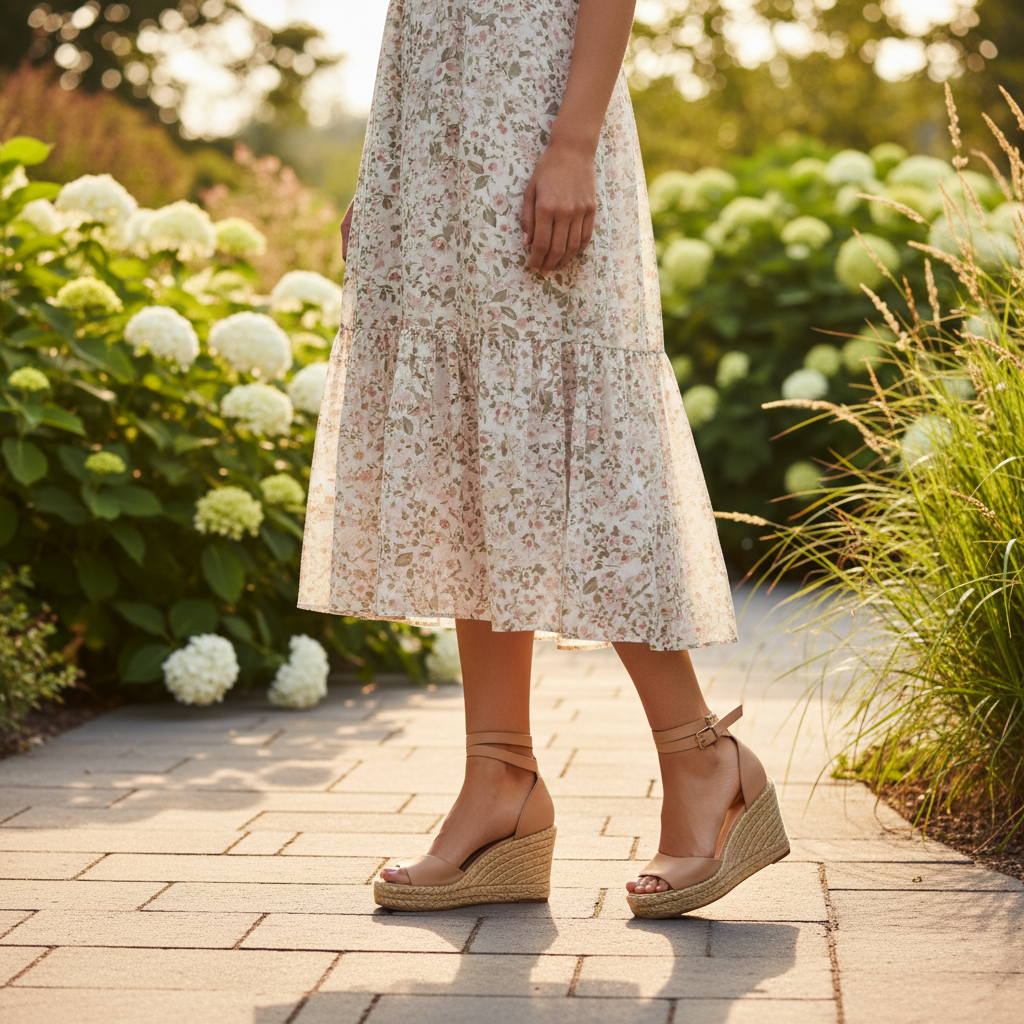
Quick self-check: what kind of summer dress are you styling?
Before shopping, get clear on your dress “category”. It saves money, and it prevents buying a wedge that only works with one outfit.
- Maxi dress: long hem, needs wedges that don’t snag and don’t look too heavy.
- Midi dress: the trickiest length, wedges can either elongate or cut you off at the calf.
- Mini dress: wedges can look great, but platform height can turn “cute” into “club”.
- Wrap dress: adjustable waist, works with both casual espadrille wedges and cleaner leather wedges.
- Slip dress: minimal lines, usually better with sleeker wedges and lighter straps.
- Smocked or tiered dress: already has texture and volume, usually better with simpler shoe details.
Also note the fabric. Linen and cotton can handle a natural jute wedge, while satin or silky blends often look better with leather or a smoother finish.
Choose the right wedge: height, shape, and support that actually matter
Most people focus on heel height, but the “feel” comes from the pitch (the angle from heel to toe) and footbed shape. Two wedges with the same height can wear completely differently.
A practical wedge cheat sheet
| What you want | Wedge features to look for | Common trade-off |
|---|---|---|
| All-day comfort | Lower pitch, cushioned footbed, secure straps | May look more casual |
| Leg-lengthening look | Nude-to-you color, higher wedge, open vamp | Can feel less stable if too steep |
| Dressy vibe | Smooth leather, minimal seams, slimmer wedge profile | Less forgiving on wide feet |
| Outdoor walking | Rubber outsole, moderate height, wider base | Bulkier silhouette |
Fit and comfort checks (do these in 60 seconds)
- Your heel should not lift more than a little when you walk, too much lift usually means blisters later.
- Toes should not curl to “hold on”, that often signals the shoe is too long or the straps are too loose.
- If there’s an ankle strap, it should feel secure without pinching, especially when you flex your foot.
If you have foot pain or conditions like plantar fasciitis, wedges might still be fine, but you may want advice from a podiatry professional on what support profile tends to work for you.
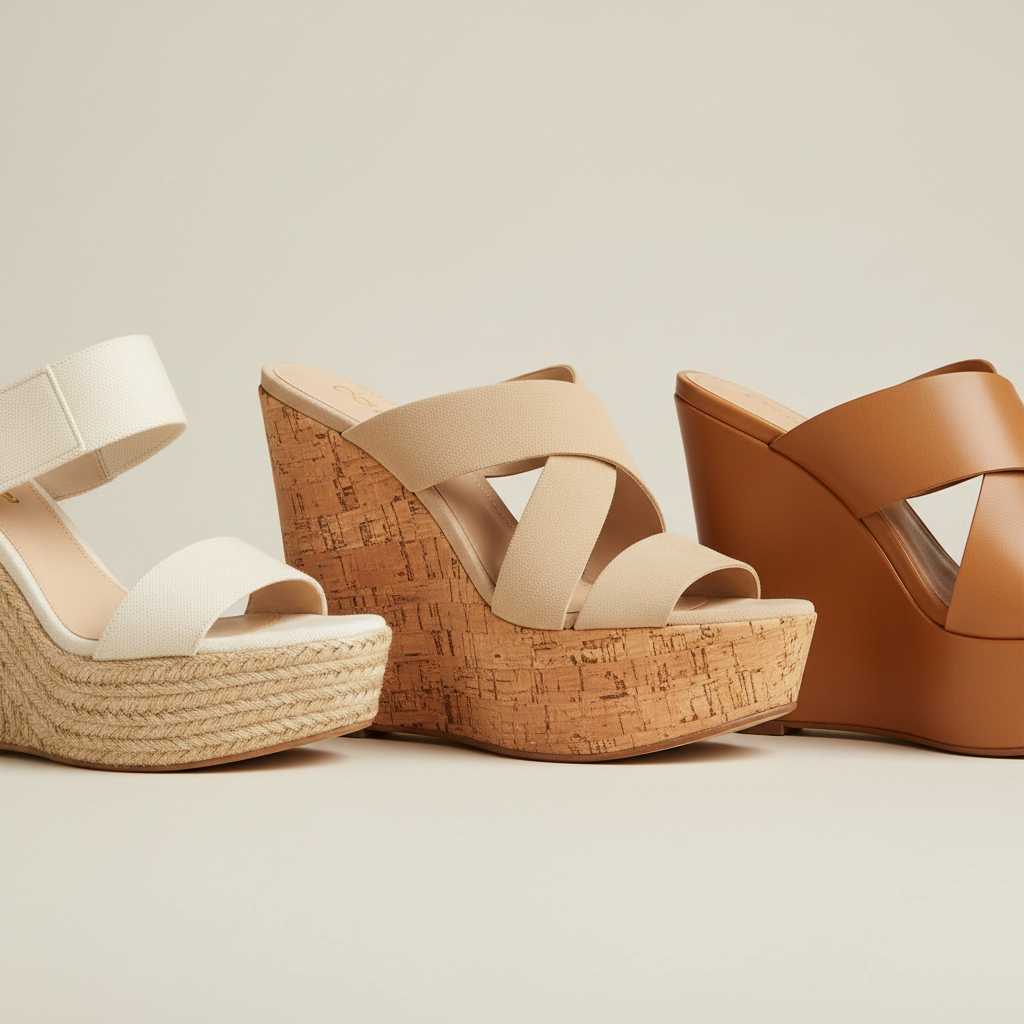
Outfit formulas: what wedges work with common summer dress styles
Here’s the part most people want: simple combinations that look “done” without overthinking. Use these as templates, then swap colors and materials based on your wardrobe.
Maxi dresses
- Best match: medium-height espadrille wedges or sleek cork wedges.
- Why: they add height so the hem floats, and the broader base balances the long line.
- Style tip: if the maxi already has tiers or ruffles, pick a cleaner upper with fewer straps.
Midi dresses
- Best match: wedges with an open vamp (more skin at the front) and a slightly slimmer wedge profile.
- Why: midi length can visually “cut” the leg, so a lighter-looking shoe helps elongate.
- Watch out: thick ankle straps can shorten the line, especially with calf-hitting hems.
Mini dresses
- Best match: lower-to-mid wedges with supportive straps, or a subtle platform wedge.
- Why: the dress already shows leg, so you don’t need extreme height to get the effect.
Slip dresses
- Best match: smooth leather wedges, thin straps, minimal hardware.
- Why: slip dresses look sharp when the shoe looks streamlined, not busy.
Casual sundresses (smocked, cotton, eyelet)
- Best match: espadrille wedges, canvas details, or soft suede in light tones.
- Why: texture feels natural with these fabrics, and the outfit reads “summer” instantly.
Color and material: the easy way to look coordinated
If you want one pair that works with most dresses, you’re usually choosing between nude-to-you, tan, and off-white. Black can work, but it changes the mood fast, and can feel heavy with light prints.
- Nude-to-you: easiest leg-lengthening effect, great for weddings and dressier events.
- Tan or cognac: the most forgiving everyday neutral, especially with denim jackets and straw bags.
- White or cream: fresh for daytime, but scuffs show more, so materials matter.
- Metallic (gold/champagne): surprisingly wearable, reads “styled” without clashing with prints.
Material matters for comfort too. Suede can feel soft but may stain in humidity, leather can mold to your foot over time, and jute espadrille wedges are summery but can fray if you drag them on rough pavement.
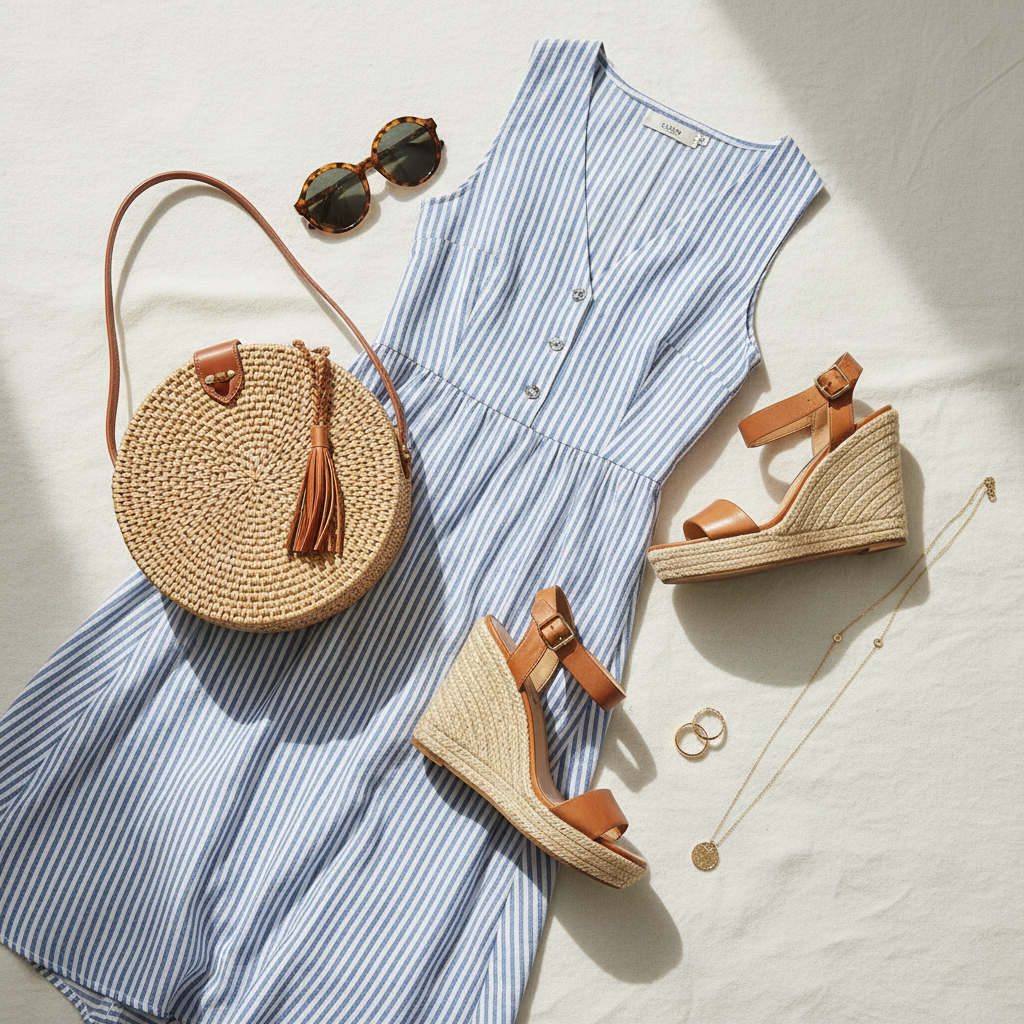
Practical styling tips for real situations (work, weddings, travel)
Most “cute outfit” advice falls apart when you add heat, walking, and schedules. These tweaks keep the look intact when you’re actually out of the house.
For work or business-casual
- Pick a clean leather wedge in a neutral shade, avoid loud rope texture if your office leans polished.
- Look for a secure back strap, slides can look great but may feel sloppy if you walk fast.
For weddings and dressier events
- Choose a wedge with slimmer side profile and fewer seams, it reads more “occasion”.
- If you’ll be on grass, wedges are often easier than stilettos, but test stability at home so the pitch doesn’t surprise you.
For travel and city walking
- Prioritize rubber outsole grip and a footbed that doesn’t feel slick when you sweat.
- Pack blister protection, even a good pair can rub on day one.
Mistakes that make wedges look “off” with summer dresses
- Too much bulk on both top and bottom: tiered dress plus chunky platform can feel heavy, simplify one side.
- Straps cutting at the widest part of the ankle: visually shortens the leg on many people, try a lower strap or a more open upper.
- Wrong undertone: cool-toned dress with very warm tan shoes can clash, a softer beige or metallic often blends better.
- Ignoring hem length after adding height: a maxi that was “perfect” in flats might suddenly look too short, or swing awkwardly.
If you keep buying wedges and they never feel right, it might not be the dress, it might be the wedge pitch or strap placement for your foot shape. That’s fixable, but it takes a more specific filter when shopping.
Conclusion: a simple plan to pick the right pair
For most closets, one great neutral wedge plus one slightly dressier option covers the majority of summer outfits. Start by matching the wedge visual weight to the dress silhouette, then let comfort checks decide the final shortlist.
If you want a quick next step, grab your two most-worn dresses, take a mirror photo with your current sandals, and note what feels off: height, bulk, or strap placement. That one observation usually points to the right upgrade.
FAQ
What women wedge sandals work best with a summer dress for everyday wear?
For everyday outfits, a medium-height wedge with a cushioned footbed and secure straps tends to be the most wearable. Tan, nude-to-you, or soft metallic shades usually blend with prints and solids without much effort.
Are espadrille wedges too casual for a midi dress?
Not always. A cleaner espadrille with minimal straps can look polished with a midi, especially in neutral colors. If the rope texture feels too casual, switch to leather uppers or a sleeker wedge profile.
How do I keep wedge sandals from rubbing in hot weather?
Heat and sweat increase friction, so look for softer lining and adjustable straps. Many people also do better breaking them in at home, and carrying blister protection for the first few wears.
Can I wear black wedge sandals with a light floral dress?
You can, but it changes the balance. Black adds contrast and can feel heavier, so it often looks better when you echo black somewhere else, like a belt, bag, or sunglasses, or when the dress print already has darker tones.
What heel height is comfortable for walking at a summer event?
Comfort varies a lot by pitch and support, not just inches. Many people find moderate wedges easier for longer walking, but if you’re not used to height, test them on stairs and uneven sidewalks before committing to an all-day plan.
Do ankle straps make legs look shorter with summer dresses?
Sometimes. A thicker strap or a strap that hits at the widest part of the ankle can visually break the line, especially with midi hems. A lower, thinner strap or a more open upper often reads longer.
What’s the easiest “one pair” option if I only buy one wedge?
A nude-to-you or tan wedge with a medium height and simple straps is usually the safest bet. It works across casual sundresses, wrap dresses, and many midi styles without feeling too formal or too beachy.
If you’re shopping and want a more “no guesswork” route, start by listing your top two dress lengths and your main summer plans, then filter wedges by strap security and wedge pitch before you even look at colors, it narrows choices fast and keeps you closer to pairs you’ll actually wear.