
how to style scrubs fashionable starts with one honest idea, your uniform can still look intentional even when your day feels anything but.
Most people get stuck because they focus on “cute” as in trendy, when in healthcare and clinical settings, cute usually means clean lines, good fit, and a few smart details that don’t get in your way. The goal is to look put-together, not precious.
In this guide, you’ll get practical outfit formulas, a quick self-check to match your workplace rules, and small upgrades that tend to make the biggest difference, without creating safety issues or looking unprofessional.

Start with the “non-negotiables” at your workplace
Before you invest in new sets or accessories, get clear on what your unit actually enforces. Dress codes vary a lot between hospitals, dental offices, med spas, and clinics, and the strictness can change by manager.
According to OSHA, workplaces should assess hazards and set appropriate controls, which can include clothing and PPE practices in some settings. If you work around biohazards, your “style choices” may be limited for good reasons.
- Color rules: specific colors by role, no prints, or approved brand only.
- Infection control: “bare below the elbows” policies, laundering rules, limited jewelry.
- Footwear expectations: closed-toe, non-slip, wipeable materials.
- ID and patches: where badges must sit, whether pins are allowed.
If your environment is stricter, styling becomes more about fit, fabric, and polished basics than loud accessories.
Fit makes scrubs look expensive (even when they aren’t)
When people ask how to style scrubs fashionable, they usually need fit guidance more than they need new colors. Baggy can read sloppy, too tight can restrict movement or look unprofessional, and both get uncomfortable fast.
Quick fit checklist
- Top sits smoothly across shoulders, no pulling at buttons or seams.
- You can raise arms, bend, and reach without hem riding up too much.
- Pants stay up without constant tugging, waistband lies flat.
- Hems avoid dragging on the floor, especially near fluids.
Small tailoring moves that usually help
- Hem the pants: the fastest way to look sharper and reduce tripping risk.
- Choose a tapered leg: still roomy, but cleaner than wide legs in many cases.
- Pick the right rise: mid or high rise often looks more streamlined and stays put.
If you’re between sizes, many people do better sizing up and choosing a cut labeled “slim” or “jogger” rather than sizing down and losing mobility.

Color strategy: build a mini “scrub wardrobe” that mixes well
Color is where you can get cute without doing the most. The trick is choosing a small palette that always looks deliberate, especially under harsh hospital lighting.
- Safe, flattering core: navy, black, charcoal, ceil blue, deep green.
- Softer accents: wine, plum, dusty rose, steel blue, warm gray.
- If you wear prints: keep the print small and pair with one solid color.
Many workplaces allow a printed scrub top with solid pants, and that’s often the easiest “cute upgrade” without changing your whole system.
A simple mix-and-match table
| Base scrub color | Works well with | Gives this vibe |
|---|---|---|
| Navy | Heather gray jacket, white sneakers (if allowed), gold-tone studs | Sharp, classic |
| Ceil blue | Charcoal hoodie-jacket, black clogs, simple watch | Clean, approachable |
| Forest green | Black underscrub, black shoes, subtle badge reel | Modern, grounded |
| Black | Warm gray layer, monochrome accessories | Sleek, minimal |
Layering: the easiest way to look styled while staying practical
Layers solve two real problems, temperature swings and “I want to look finished.” They also let you adjust for patient-facing areas versus back-of-house moments.
- Underscrub tops: fitted, breathable, solid colors; avoid loose cuffs if you do procedures.
- Warm-up jackets: structured zip jackets often look more polished than fleece.
- Vests: can look sharp, but check policy, some areas avoid them for cleanliness.
If your facility follows “bare below the elbows,” you may need to skip long sleeves during direct patient care, or roll sleeves up consistently. When in doubt, ask your charge nurse or supervisor, it’s not worth guessing.
Accessories that read cute, not cluttered
Accessories are where many people overcorrect. Keep it low-profile, secure, and easy to disinfect, especially in clinical environments.
Good “style ROI” picks
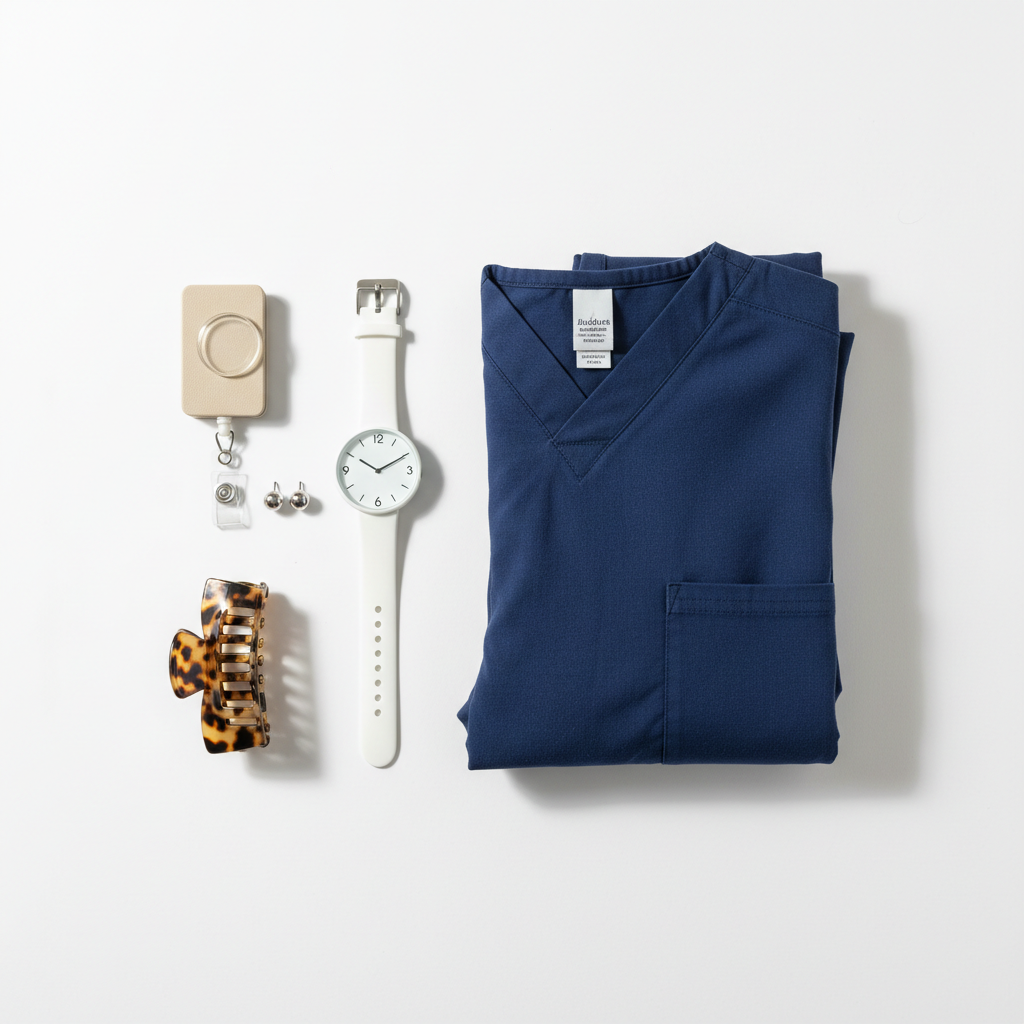
- Badge reel: one clean design or neutral color, no bulky charms if you’re hands-on.
- Small earrings: studs or tiny hoops that won’t catch on masks or gloves.
- Watch: simple band, easy to wipe, avoid dangling bracelets in most settings.
- Hair: sleek claw clip, low bun, or braid, neat hair reads instantly polished.
Skip anything that swings, sheds glitter, or gets in the way. Cute is great, but if it touches your patient or your sterile field, it becomes a problem fast.
Shoes and socks: comfort is the style foundation
Shoes quietly decide whether your whole look feels current. They also decide how your body feels after hour ten. In many cases, the “fashionable” choice is the one that keeps you stable and pain-free.
- Go-to options: wipeable clogs, supportive sneakers if allowed, slip-resistant work shoes.
- Color: black, white, or matching your scrubs tends to look clean and intentional.
- Socks: solid or subtle pattern, avoid anything that looks childish unless your setting encourages it.
If you have foot pain, recurring back tightness, or numbness, consider asking a podiatrist or qualified clinician about footwear and insoles, advice varies by anatomy and workload.
Three outfit formulas you can copy this week
If you want how to style scrubs fashionable without thinking every morning, use formulas. They reduce decision fatigue, and they’re easy to repeat.
- The Minimalist: black scrubs + matching black shoes + charcoal jacket + clean bun.
- The Soft Pop: navy scrubs + dusty rose underscrub top + neutral badge reel + small hoops.
- The Modern Jogger: tapered jogger scrub pants + fitted top + simple watch + white/black sneakers (policy permitting).
Key takeaways to keep on your phone
- Fit first, then color, then accessories.
- One “cute” element per outfit usually looks more professional than five.
- Choose items you can disinfect and move in, your job comes first.
Common mistakes that make scrubs look less stylish
A lot of “why do my scrubs look frumpy?” comes from a few repeat issues, and they’re fixable without buying a whole new closet.
- Too many loud elements: printed top, novelty socks, bright shoes, and big hair accessories at once.
- Wrong size in the shoulders: even pricey scrubs look off when seams drop too far.
- Pants pooling at the ankle: it reads messy and can be a safety issue.
- Over-layering: bulky hoodies can look casual and may not meet policy.
- Ignoring laundering details: faded colors and wrinkled fabric kill the “cute” factor.
If you’re improving one thing this month, make it hemming and consistent laundering, those two changes show up immediately.
Closing thoughts: stylish scrubs should still feel like workwear
how to style scrubs fashionable is really about looking neat, feeling confident, and staying within the rules that keep patients and staff safe. You don’t need a dramatic makeover, you need a few repeatable choices that work on your worst day, not just your easy shifts.
Pick one upgrade this week, maybe a better-fitting cut or a tighter color palette, and test it for comfort over a few shifts. If it holds up, build around it.
If you want a more done-for-you approach, it can help to choose one brand and stick to two core colors, then rotate layers and accessories, it keeps mornings simple and your look consistent.