
men puffer vest warm layering works when you want real insulation without the arm bulk that can make a jacket feel restrictive, but it only pays off if the vest, midlayer, and outer shell actually “play nice” together.
Most frustration comes from the same few issues, a vest that’s too tight to trap warm air, the wrong fill weight for your climate, or a layering stack that blocks moisture and leaves you clammy. If you’ve ever felt warm for 10 minutes and then oddly cold, it’s usually not your imagination.
This guide focuses on how to choose a warm puffer vest for men, how to layer it for commuting, travel, and light outdoor use, and what to avoid so you’re not buying a piece that lives in the closet. I’ll also give a quick checklist, a comparison table, and a few easy outfit “templates” you can repeat.
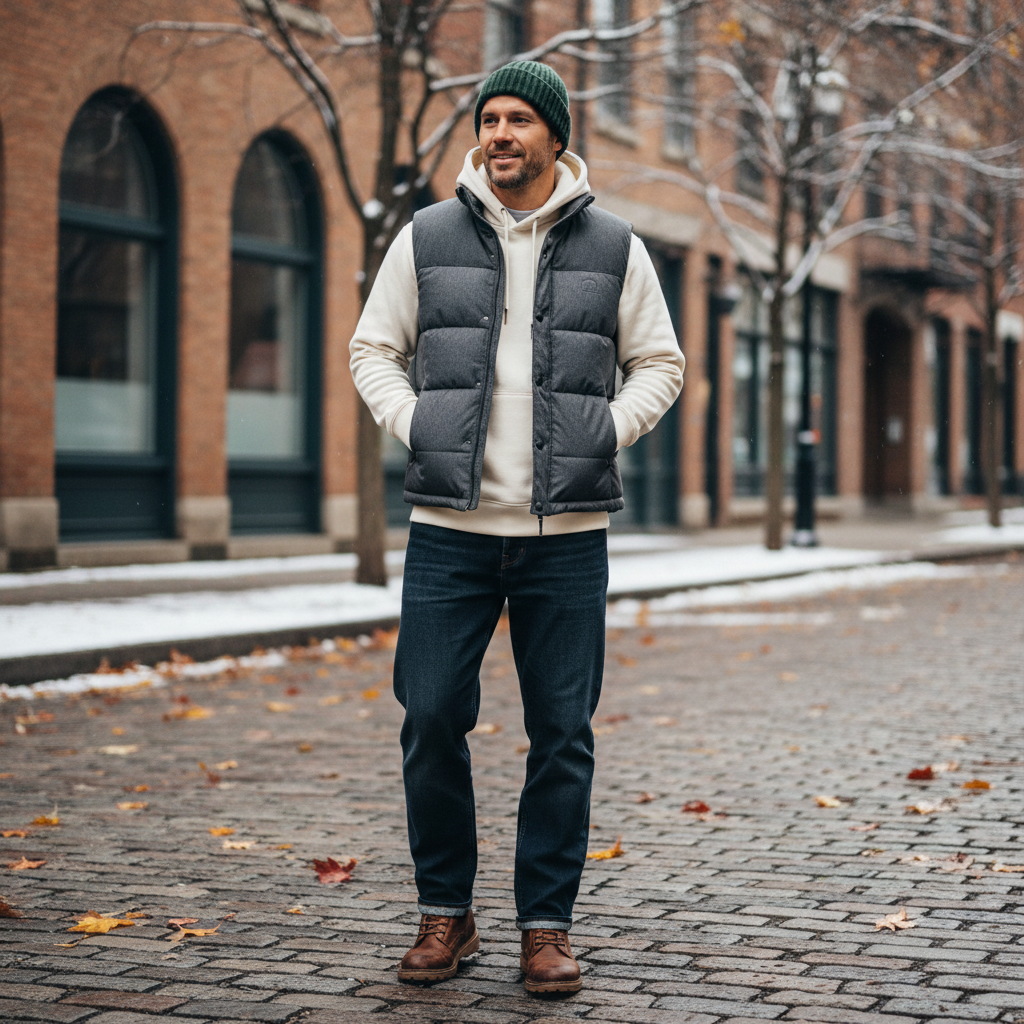
Key takeaway: a puffer vest is a temperature tool, not a magic shield. Get the insulation level right, leave enough room for air, and manage moisture, that’s when it feels “warm” instead of just “puffy.”
Why a puffer vest can feel warmer than you expect
A vest looks simple, but the warmth comes from a few mechanics that are easy to miss when you shop quickly.
- Core heat matters more than arms, keeping your torso warm often makes your whole body feel warmer, even if your sleeves are thinner.
- Loft traps air, insulation works by holding still air, so compression from a tight fit reduces warmth.
- Less restriction, more movement, many people walk faster, carry bags, or drive more comfortably in a vest, and that “use it more” factor is real.
- Layering flexibility, you can tune warmth by swapping a base layer or shell instead of owning five different jackets.
According to REI, staying warm in cold weather is largely about layering strategy, including a base layer for moisture, an insulating midlayer, and protection from wind or precipitation on top. A puffer vest often slots into that midlayer role.
How to choose a warm men’s puffer vest (materials, fill, and fit)
If your goal is men puffer vest warm layering for real daily use, shopping by “looks warm” usually backfires. These details decide whether it performs.
Insulation: down vs synthetic
- Down tends to offer excellent warmth-to-weight and packs small, great for travel and dry cold. Many products list “fill power” (like 650 or 800), higher numbers often mean more loft per ounce.
- Synthetic insulation usually handles damp conditions better and can be easier to care for, a common win for rainy commutes or variable weather.
According to Patagonia, down insulation can lose loft when wet, while synthetic fills keep more warmth in damp conditions, which is why wet-weather layering often favors synthetic pieces.
Shell fabric and construction details that actually matter
- Wind resistance, a lightly wind-resistant face fabric can make a vest feel significantly warmer in gusty conditions.
- Baffles and stitch-through lines, more seams can mean more potential cold spots, though it depends on build quality and intended weight.
- Hem and collar, a higher collar and a snug (not tight) hem help stop heat from pumping out when you move.
- Zipper quality, a draft flap or well-built zipper reduces heat loss more than most people expect.
Fit: the “warmth” is in the air gap
A warm vest should feel slightly roomy over a midlayer, not painted on. If the chest pulls, the baffles flatten, or the zipper waves, you lose loft and comfort. But if it’s too big, cold air circulates and you get that “why am I still chilly” feeling.
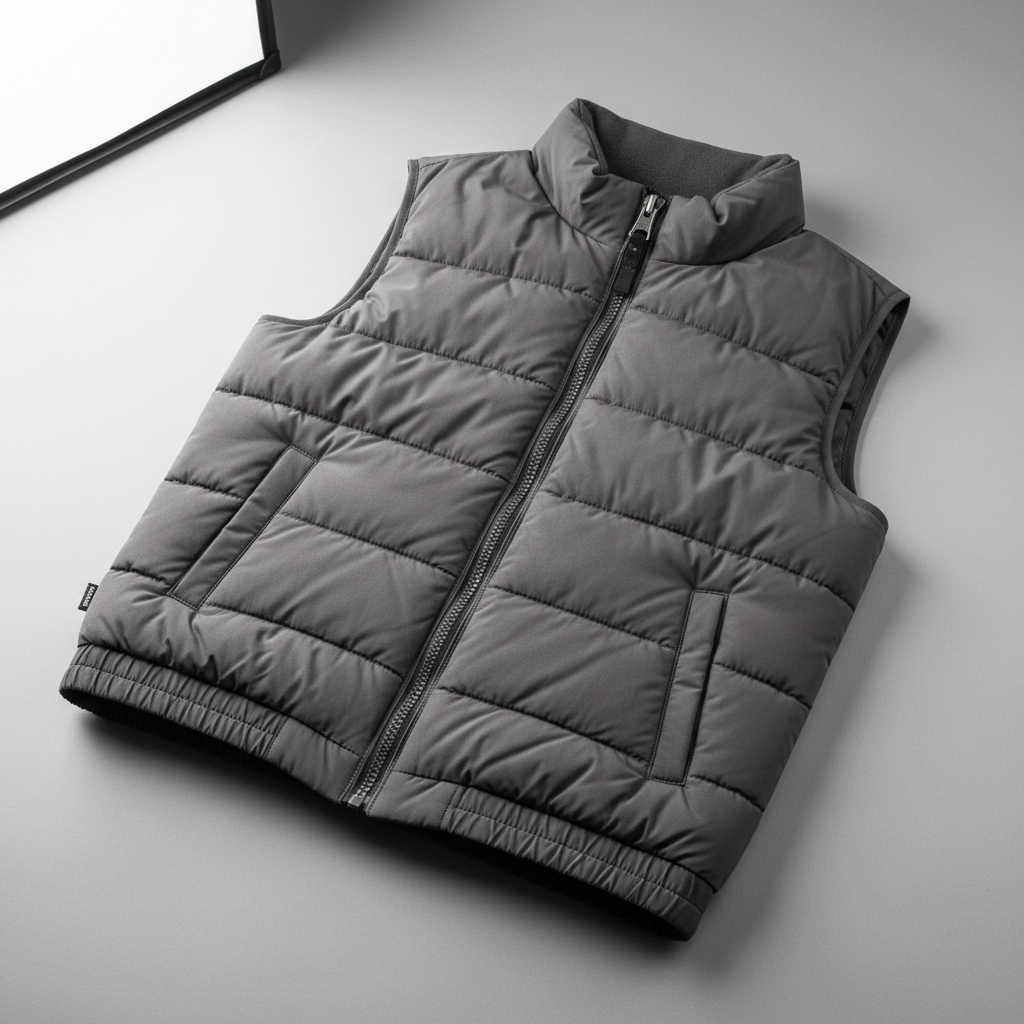
Quick fit test: wear your typical hoodie or fleece, zip the vest, then raise your arms as if grabbing a subway pole. If the vest rides up aggressively or feels tight at the armpits, sizing or cut may be off for layering.
Layering system that works: base, mid, shell (and where the vest fits)
Most men use a puffer vest in one of two roles, either as the main insulating piece under a shell, or as an outer layer over a sweatshirt in dry cold. Your choice affects everything else.
- Base layer (next-to-skin): aim for moisture management. Merino or synthetic performance knits tend to dry faster than cotton, which matters when you go from cold street to heated office.
- Midlayer (insulation): the vest can be the midlayer, or you can pair it with a light fleece for extra warmth.
- Shell (weather protection): a thin windbreaker or rain shell over a vest often boosts warmth more than adding another thick knit layer.
According to The North Face, effective layering is about regulating heat and moisture across conditions, not simply adding thickness. That’s the mindset that makes a vest useful instead of redundant.
Which vest thickness do you need? A practical comparison table
Brands describe insulation in different ways, so rather than chasing numbers, it helps to think in “use bands.” The categories below are a practical shortcut.
| Vest type | Best use | Typical layering partners | Common downside |
|---|---|---|---|
| Lightweight puffer vest | Cool mornings, travel, office-to-outdoors | Long-sleeve tee, thin fleece, light shell | May feel underpowered in wind without a shell |
| Midweight insulated vest | Daily winter wear, variable temps | Hoodie or fleece, rain shell in wet areas | Can feel bulky under slim coats |
| Heavy/expedition-style vest | Colder climates, low-activity outdoor time | Thermal base, thick midlayer, roomy shell | Overheats indoors, harder to pack |
Self-check: are you layering the vest correctly?
If men puffer vest warm layering isn’t delivering, you can usually pinpoint the cause in two minutes.
- You feel cold in the wind: you probably need a shell layer, not a thicker vest.
- You feel clammy: base layer may be cotton or too heavy, moisture gets trapped.
- The vest feels warm at first, then colder: insulation may be compressed by a tight outer layer.
- You overheat inside: the vest might be too thick for your activity level, or you need an easier venting setup (two-way zip, lighter base).
- Your neck/chest feels drafty: collar height, zipper, or hem seal is the weak point.
Outfit formulas you can copy (commute, travel, casual outdoor)
Here are repeatable stacks that tend to work across many U.S. climates, adjusting fabric weights based on your temperature range.
1) Commute + office heat swings
- Base: breathable long-sleeve tee (merino or synthetic)
- Mid: lightweight puffer vest
- Outer: unlined coat or casual jacket you can take off fast
- Tip: keep the vest as your “indoor insulation,” and let the outer layer handle wind on the walk
2) Rainy or coastal winter days
- Base: quick-dry knit
- Mid: synthetic insulated vest (often more forgiving in damp air)
- Outer: rain shell with decent hood
- Tip: a shell that blocks wind can make a medium vest feel surprisingly warm
3) Dry cold, weekend errands, casual
- Base: tee + flannel or thin sweater
- Outer: midweight down vest on top
- Optional: add a beanie before you add more torso insulation
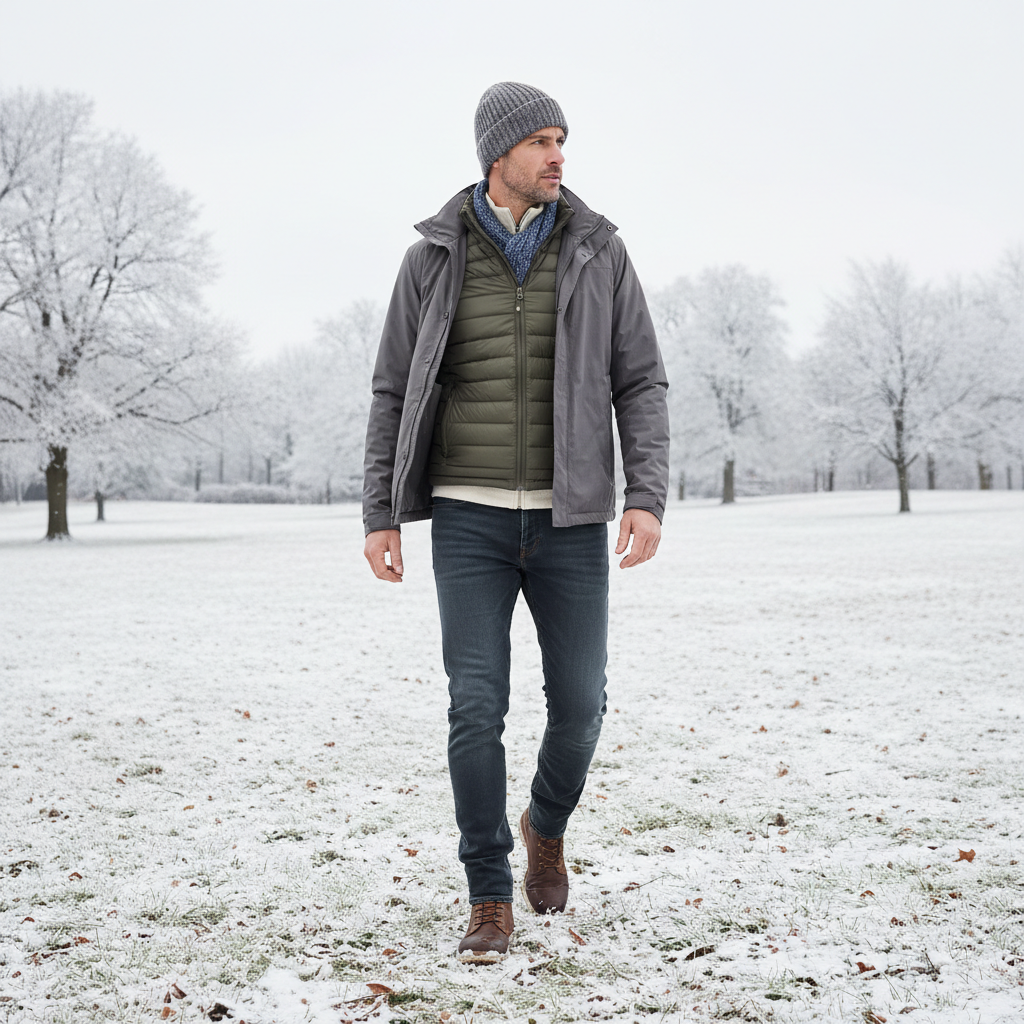
Practical trick: if you keep adjusting your sleeves, your midlayer may be too bulky. Swap a thick sweatshirt for a thin fleece, then let the vest provide the insulation.
Mistakes that make a warm vest feel pointless
- Buying too slim for “style”, it looks sharp on a T-shirt, then fails the moment you try real layering.
- Wearing cotton base layers in cold-to-warm transitions, cotton can hold moisture, which often feels chilly once you step back outside.
- Stacking too many soft layers without a wind layer, three sweaters still leak heat in wind more than a thin shell does.
- Assuming thicker is always better, overheating leads to sweat, and sweat is the fast lane to feeling cold later.
- Ignoring mobility, if the armholes rub or the vest bunches under a shell, you’ll stop wearing it.
When it’s worth getting expert help (fit, weather needs, safety)
If you’re using a vest for cold-weather work sites, backcountry travel, or conditions where hypothermia is a realistic risk, it’s smart to talk with an experienced outfitter or a qualified professional who understands your environment. Gear choices can be very personal, and factors like wind exposure, exertion level, and how long you’ll be stationary change the “right” setup.
Also consider asking for help if you regularly experience unusual cold sensitivity, numbness, or circulation concerns, a medical professional can advise on whether there’s an underlying issue beyond clothing choices.
Conclusion: make your vest earn its spot
When men puffer vest warm layering is set up correctly, it’s one of the most useful pieces in a wardrobe because it adapts, it packs, and it plays well with different outfits. The main win comes from choosing the right insulation type for your climate, leaving room for loft, and pairing it with a wind or rain layer when conditions demand it.
If you take only two actions, do this, try your vest over your most common midlayer to confirm fit, then test it on a breezy day with a light shell on top. That quick reality check saves a lot of guessing.
FAQ
Is a puffer vest warm enough for winter?
In many cases, yes for mild-to-moderate winter days, especially if you add a windproof shell. For deep cold or long periods standing still outdoors, you may need a heavier system or a full insulated jacket.
Should I wear a puffer vest under or over a hoodie?
Both can work. Over a hoodie feels casual and warm in dry weather, under a shell tends to be warmer in wind and more weather-ready. The deciding factor is usually wind and rain, not the hoodie itself.
Down or synthetic for a men’s warm layering vest?
Down often wins for packability and warmth-to-weight in dry cold. Synthetic tends to be more forgiving in damp commutes and can be easier to wash, which matters if it’s a daily piece.
How should a puffer vest fit for layering?
It should zip comfortably over your typical midlayer without flattening the insulation. If the baffles look compressed or the zipper pulls tight across the chest, size or cut may be limiting warmth.
What do I wear under a puffer vest to avoid sweating?
A breathable base layer, merino or synthetic in particular, helps manage moisture. If you run hot, choose a lighter base and rely on a shell for wind instead of adding another thick knit.
Can I wear a puffer vest in the rain?
Light rain is usually fine short-term, but sustained rain is where a shell helps. If your vest uses down, keeping it dry matters more, synthetic insulation is often less fussy in wet conditions.
How do I wash and store a puffer vest?
Follow the care label, and avoid compressing it for long storage. Many vests do better stored loosely so insulation keeps loft, packing sacks are great for travel, not for months in a closet.
Looking for an easier way to get it right?
If you’re trying to build a small, dependable cold-weather rotation, it can help to pick the vest after you’ve decided what your “everyday shell” is, then match fit and insulation to that combo. If you want, tell me your city, typical winter temps, and whether you run hot or cold, and I can suggest a simple layering setup to start with.