
Best watches for women minimalist usually come down to three things: a clean dial, wearable sizing, and a strap you won’t fight with every morning. If you’ve ever bought a “simple” watch that felt bulky, hard to read, or weird on the wrist, you already know minimalist can still go wrong.
What makes this category worth doing carefully is that a minimalist watch ends up in heavy rotation, it sits next to jewelry, work outfits, gym clothes, and weekend basics, so small design choices matter more than flashy features.
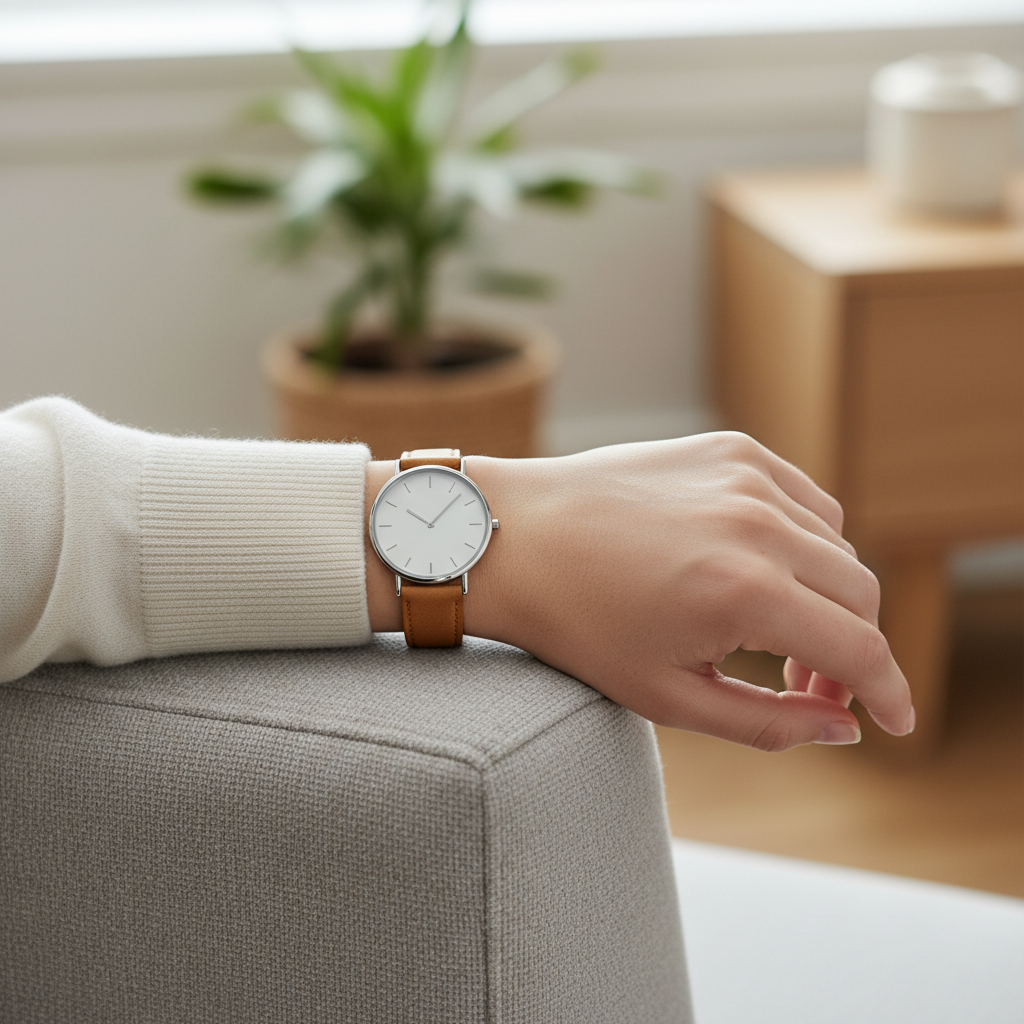
This guide keeps it practical: how to pick the right size, what materials age well, which specs matter, and a short list of minimalist styles that tend to work for most people. No hype, just what’s likely to hold up in real life.
What “minimalist” really means in a women’s watch
Minimalist doesn’t mean “plain,” it means the design removes distractions so proportions and finishing do the talking. Most minimalist pieces share a few traits, even across brands and budgets.
- Simple dial layout: two or three hands, few markings, no busy subdials unless they’re subtle.
- Thin case profile: tends to slide under cuffs and feels less top-heavy.
- Neutral color palette: black, white, silver, gold, or muted tones that pair easily.
- Readable at a glance: good contrast between hands and dial, sensible indices.
One nuance people miss: a truly minimalist watch still needs visual “anchor points,” otherwise it looks like a blank disc and becomes harder to read. A tiny seconds track, applied indices, or well-shaped hands can make the difference.
Quick sizing and fit rules (so it doesn’t look oversized)
Fit is where many “best watches for women minimalist” lists quietly fail, because what looks sleek in a product photo can wear large. If you want that clean, intentional look, start with sizing and strap geometry.
Case size guidelines (practical range)
- 26–30mm: classic, jewelry-like, good for small wrists or a refined look.
- 31–34mm: modern everyday sweet spot for many women.
- 35–38mm: bolder minimalist style, can still look clean if the case is thin.
What matters more than diameter
- Lug-to-lug length: if lugs overhang your wrist, the watch will feel “too big” even at a small diameter.
- Case thickness: thin cases feel dressier and less bulky.
- Strap taper: a strap that narrows toward the buckle often looks more elegant.
According to ISO (International Organization for Standardization) timekeeping standards such as ISO 22810 for water resistance, ratings depend on defined test conditions, but real-world wear can differ, so fit and use-case still matter as much as specs.
Materials and movement: what’s worth paying for
Minimalist watches hide fewer “distractions,” which means materials show quickly, both the good and the cheap. If you’re prioritizing long-term wear, this section matters.
Case and crystal
- Stainless steel: the safest everyday choice, durable and easy to refinish lightly.
- PVD gold/rose gold coating: looks great, but longevity varies by brand and how hard you wear it.
- Sapphire crystal: higher scratch resistance than mineral glass, usually a worthwhile upgrade.
- Mineral crystal: fine for budget picks, but tends to pick up scratches sooner.
Straps that age well
- Leather: comfortable and classic, but it’s sensitive to sweat and water.
- Stainless bracelet: durable and polished, but sizing links takes effort.
- Mesh bracelet: minimalist favorite, often easier to micro-adjust.
Quartz vs automatic (real-life choice)
Quartz wins for set-and-forget accuracy and low maintenance. Automatic feels more “watch-nerdy” and romantic, but it can run fast or slow and needs servicing eventually. For many shoppers chasing a clean daily piece, quartz is a calm, practical choice.
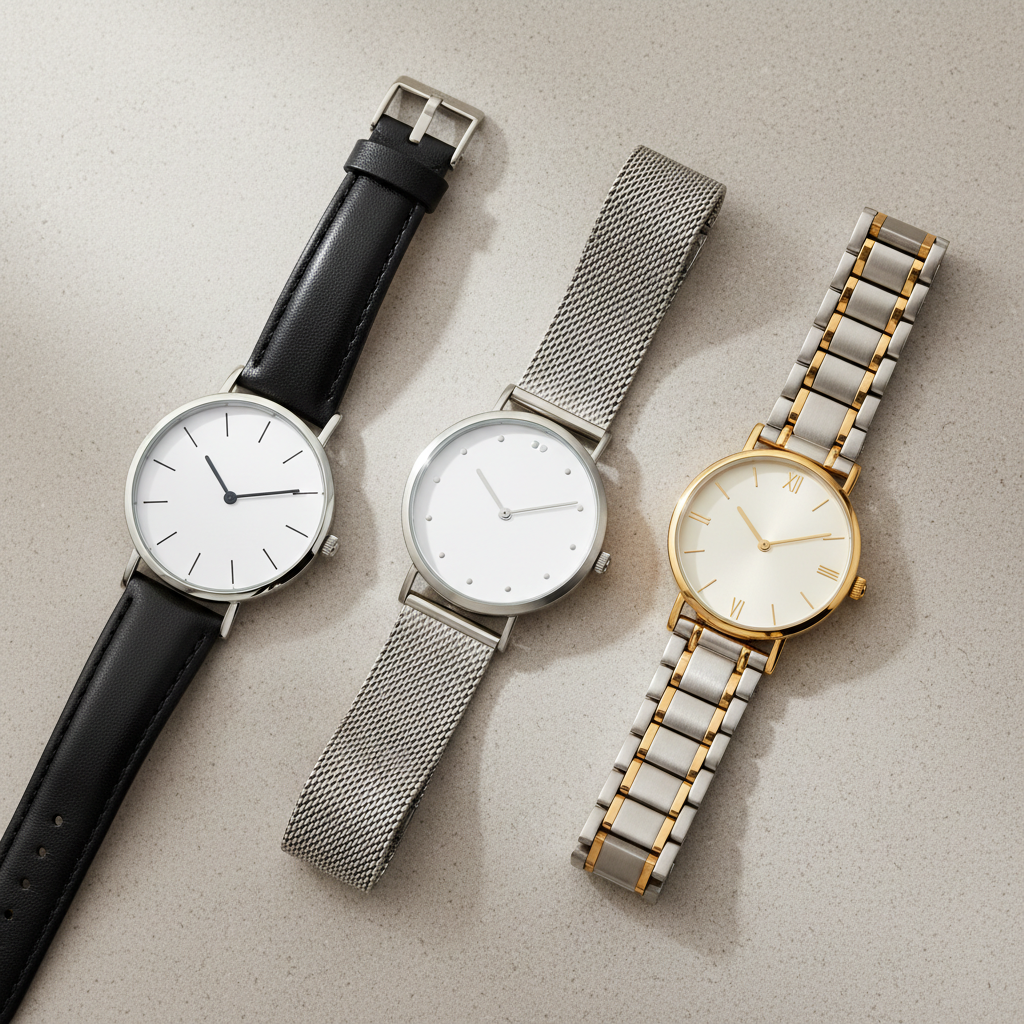
A practical shortlist: minimalist watch styles that work for most women
Rather than pretending there’s one perfect pick, it helps to choose a style “bucket” that matches your wardrobe and tolerance for maintenance. These are the minimalist archetypes that tend to deliver.
- The clean white dial on leather: office-friendly, reads crisp, pairs with everything.
- Black dial on steel: sharper and more modern, great if you wear black often.
- Gold-tone with uncluttered markers: jewelry-first look, better when the dial stays simple.
- Small rectangular or square case: quietly elegant, feels vintage without being loud.
- Mesh bracelet minimal: sleek, adjustable, and very “intentional” looking.
If you’re shopping by trend, try not to over-index on social photos. A watch can look ultra-minimal online but feel flat in person if the hands blend into the dial or if the case finishing looks dull.
Comparison table: what to check before you buy
Here’s a quick way to compare options, especially if you’re bouncing between a few tabs and everything starts to look the same.
| What you’re deciding | Good sign | Potential drawback | Best for |
|---|---|---|---|
| Case size | 31–34mm with short lug-to-lug | Large diameter + long lugs overwhelms wrist | Everyday minimalist wear |
| Crystal | Sapphire | Higher cost | Long-term, scratch-prone lifestyle |
| Strap | Quick-release pins, tapered strap | Some fashion straps crack faster | People who like swapping looks |
| Movement | Quartz for simplicity | Battery changes every few years | Low-fuss daily watch |
| Water resistance | 3–5 ATM for daily splashes | Not all ratings equal real swimming safety | Normal handwashing, rain |
How to choose your minimalist watch in 10 minutes (a simple method)
If you’re stuck, this quick process usually clears it up.
- Pick your “metal story”: mostly silver jewelry, mostly gold, or you mix. Match the case to what you wear most.
- Decide your default strap: leather for soft and classic, bracelet for durable, mesh for adjustable sleek.
- Set a size ceiling: if you’ve ever said “this looks huge,” cap it at 34mm and prioritize short lugs.
- Choose dial contrast: if you value readability, avoid low-contrast hands on a same-tone dial.
- Check return policy: minimalist watches can surprise you on-wrist, returns reduce regret.
For gifting, aim for neutral: silver case, white or light dial, and either a bracelet or medium-brown/black leather. It’s not “the most exciting,” but it’s the most wearable.

Common mistakes (and what to do instead)
Minimalist buying mistakes are usually quiet, you don’t notice until week two, then the watch sits in a drawer.
- Mistake: choosing “thin” but unreadable
Do instead: look for hands with a clear shape and contrast, even on a clean dial. - Mistake: ignoring strap comfort
Do instead: if you dislike stiff leather, choose softer leather, mesh, or a bracelet with smooth edges. - Mistake: assuming all 3 ATM equals “safe for swimming”
Do instead: treat it as splash-resistant unless the brand clearly positions it for swimming, and consider your habits. - Mistake: buying gold-tone expecting zero wear
Do instead: expect some patina over time, and avoid harsh abrasion if you want the finish to last.
According to FTC (Federal Trade Commission) guidance on consumer protection, clear advertising and return policies matter, so it’s smart to keep receipts and confirm warranty terms if you’re buying from a marketplace seller.
Key takeaways and a realistic “best pick” mindset
There isn’t one universal winner, but there is a best choice for how you dress and how you live. If you want a dependable daily option, prioritize fit, dial readability, and materials before you chase micro-trends.
- Start with size and lug-to-lug, because comfort decides whether you wear it.
- Choose sapphire if you’re rough on accessories, it often pays back in fewer scratches.
- Pick a strap you’ll actually tolerate daily, not just what looks good in a photo.
- Keep water expectations realistic, ratings can be misunderstood in day-to-day use.
If you’re shopping for best watches for women minimalist, your next step is simple: measure your wrist, pick a size ceiling, then narrow to two strap types and one metal color, you’ll cut the noise fast and end up with a watch that feels “easy” to wear.
FAQ
What size minimalist watch looks best on a small wrist?
Many people with smaller wrists feel comfortable around 26–32mm, but lug-to-lug length matters just as much. If lugs overhang, the watch tends to look and feel larger than the diameter suggests.
Are minimalist watches good for everyday wear?
Usually yes, because the design plays nicely with most outfits. The practical limiter is durability: crystal type, strap quality, and water resistance determine how “daily” it really is.
Is quartz or automatic better for a minimalist women’s watch?
Quartz tends to be easier and more accurate day to day, while automatic can feel more special but needs more attention. If you rotate watches often, automatic pieces may stop and need resetting.
What’s a good water resistance rating for daily life?
For handwashing, rain, and basic daily wear, 3–5 ATM is commonly enough, though real-world use varies. If you plan to swim regularly, look for models clearly intended for that purpose and follow the maker’s guidance.
Do mesh straps pull hair or feel uncomfortable?
Some mesh bracelets can snag hair depending on weave and clasp design, though many wear smoothly. If you’re sensitive, buying from a retailer with easy returns can save you hassle.
How do I keep a minimalist watch from looking “cheap”?
Focus on finishing and contrast: crisp indices, clean printing, solid-feeling crown, and a strap that doesn’t look plasticky. Sapphire crystal and a well-made bracelet also elevate the look quickly.
What should I check when buying online?
Confirm case diameter, lug-to-lug, thickness, crystal material, strap width, and return policy. Product photos can hide thickness and dial contrast, so specs fill in the truth.
If you’re narrowing down options and want a more tailored shortlist, keep a small note with your wrist size, preferred case color, and strap type, then compare candidates against those basics, it’s the quickest way to land on a minimalist watch you’ll actually wear.