
How to make makeup last all day oily skin usually comes down to two things people skip: controlling oil without over-drying, and layering products in an order that grips instead of sliding. If your foundation “melts” by lunch or your T-zone looks shiny in photos, it’s not automatically your skin’s fault, it’s often the prep, texture mismatch, or too many emollient layers.
Oily skin is tricky because you need hydration (so your skin doesn’t overcompensate with more sebum) and you also need long-wear structure (so makeup stays put). Many routines lean hard one way, either stripping skin with harsh products or piling on glowy bases that never fully set.
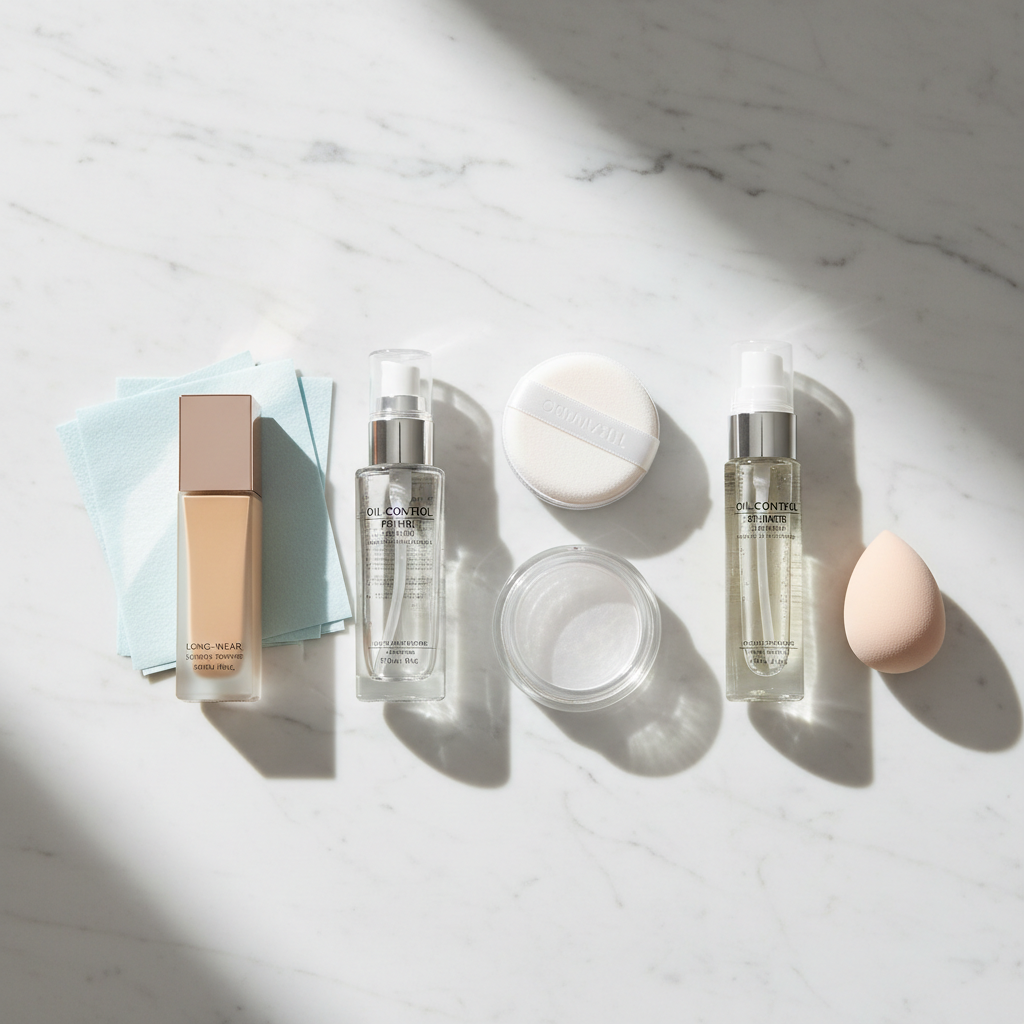
This guide focuses on practical fixes: how to prep, what product types usually behave better on oily skin, and a touch-up method that doesn’t turn into cakey buildup. You’ll also get a quick self-checklist and a simple table to troubleshoot the most common “why is it breaking up?” moments.
Why makeup fades faster on oily skin (and what’s really happening)
Oil breaks makeup apart the same way it breaks apart salad dressing: it changes the balance. A few patterns show up repeatedly in real life routines.
- Too much slip in the base: rich moisturizer, facial oil, dewy sunscreen, and a luminous primer can stack into a layer that never fully sets.
- Under-prep (yes, that’s a thing): if skin is dehydrated, it may produce more oil later, and makeup starts separating around the nose and inner cheeks.
- Texture mismatch: silicone-heavy primer with a water-based foundation (or the opposite) can pill or “roll,” especially around pores.
- Not enough set time: applying the next layer before the previous one settles is a quiet cause of sliding and patchiness.
- Over-powdering early: a thick powder layer at 8 a.m. often looks dry, then mixes with oil by noon and turns heavy.
According to the American Academy of Dermatology Association, gentle cleansing and using non-comedogenic products can help manage oily skin and reduce the chance of clogged pores. That matters because long-wear products often feel heavier, and your routine needs to stay skin-friendly.
Quick self-check: what kind of “oily skin makeup problem” do you have?
Before changing products, pin down the failure point. Different issues need different fixes.
- Shine only (makeup still looks smooth): you likely need better setting strategy and smarter touch-ups.
- Separation around nose/chin: often a prep issue, too much emollient, or foundation not adhering to that area.
- Cakey by afternoon: usually too much powder or too many reapplications without blotting.
- Pilling (little rolls on skin): product layering conflict, or rubbing instead of pressing.
- Oxidation/darkening: can be oil mixing with pigments, or a shade that’s borderline.
If you know which bucket you’re in, the “how to make makeup last all day oily skin” plan becomes less about buying more and more about adjusting the order and finish.
Prep that holds: cleanse, hydrate, and sunscreen without the grease
Think of prep as building a surface with controlled grip. You want comfortable skin, not squeaky-clean tightness.
Cleanse without over-stripping
- Use a gentle cleanser; harsh formulas can leave skin feeling tight, then oil rebounds later.
- If you’re very oily, a short contact cleanse (massage 30–60 seconds) often works better than scrubbing.
Choose lightweight hydration (yes, still hydrate)
- Look for gel-cream textures or oil-free lotions that absorb fast.
- Apply a thin layer, then wait 3–5 minutes so it settles before primer.
Sunscreen that behaves under makeup
If your SPF is glossy, your base fights an uphill battle. Many people do better with “oil-control” or “matte finish” sunscreens, but comfort varies by skin sensitivity.
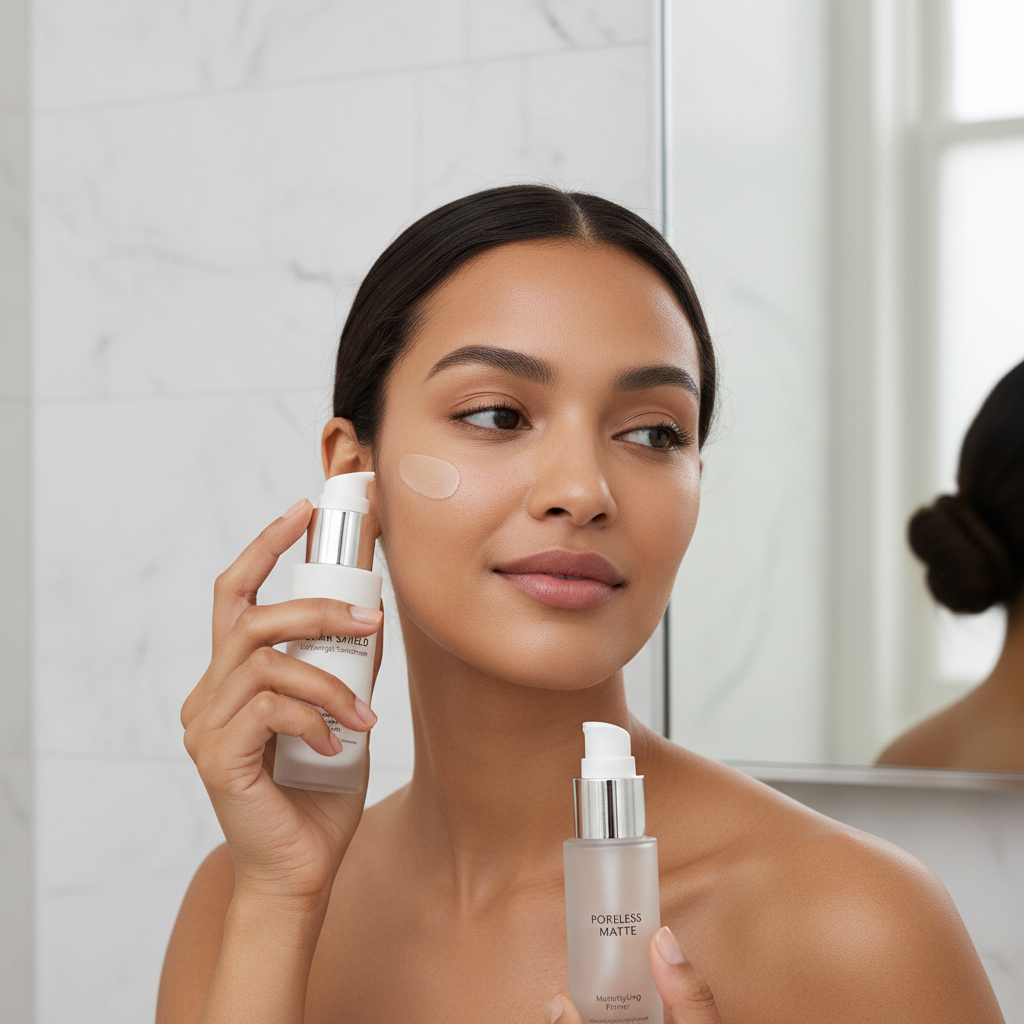
Small but important: if sunscreen pills, your foundation almost always pills too. Let sunscreen set longer (5–10 minutes) and apply base by pressing, not rubbing.
Primer and base: pick the right textures and layer them correctly
This is where most “it looked good at first” routines fall apart. You’re aiming for compatible textures and thin layers.
Primer: where it helps, where it doesn’t
- Use primer strategically: focus on T-zone, sides of nose, and pores. You don’t need it everywhere.
- Mattifying primers help with shine, but too much can make foundation grip unevenly.
- Hydrating primers can work on oily skin if dehydration is the real driver, but keep it thin.
Foundation: long-wear usually wins, but apply less than you think
- Long-wear or “soft matte” foundations tend to resist oil better than very dewy formulas.
- Apply a light layer first, press it in, then spot-conceal. Thick layers separate faster.
- If you use a sponge, use it slightly damp and press; if you use a brush, buff lightly and finish by pressing with a sponge to smooth texture.
A quick compatibility test
Put a dot of primer on the back of your hand, add foundation, mix gently. If it clumps or separates, that pairing may pill on your face too.
Setting strategy: powder placement + spray timing (the part people overdo)
Setting isn’t “more powder equals more wear.” On oily skin, it’s more like controlled reinforcement.
Use the “press, don’t dust” method
- Press a small amount of translucent powder into the T-zone and around the nose.
- Use a fluffy brush only after pressing, to sweep off excess.
- Avoid heavy powder on areas that don’t get oily, it can turn makeup chalky.
Setting spray: pick the job it needs to do
- After base, before powder can help melt layers together if you look too dry.
- After powder can reduce “powdery” finish and improve wear, especially if you press powder in.
According to the U.S. Food & Drug Administration (FDA), cosmetics should be used as directed and kept sanitary to reduce contamination risk. That matters here because long-wear routines often involve extra tools, extra layers, and midday touch-ups.
Troubleshooting table: match the symptom to the fix
If you only change one thing, change the thing that matches your problem.
| What you see | Likely cause | Fix that usually helps |
|---|---|---|
| Foundation separating on nose | Too much skincare/primer there, or not set | Use less moisturizer on nose, add targeted primer, press powder into creases |
| Shine but makeup intact | Oil on surface, base still adhered | Blot first, then a tiny amount of powder; avoid stacking foundation |
| Cakey texture by midday | Re-powdering without blotting, too much powder early | Use blotting papers, then mist lightly, then minimal powder only where needed |
| Pilling around cheeks | Layer conflict or rubbing during application | Let sunscreen set longer, press products in, avoid mixing incompatible bases |
| Makeup darkens (oxidizes) | Oil mixing with pigments, shade mismatch | Try a slightly lighter shade, use oil-control primer/powder, keep layers thin |
Midday touch-ups that don’t wreck your base
Touch-ups are where oily skin makeup often turns from “fine” to “thick.” The rule is simple: remove oil first, add product second.
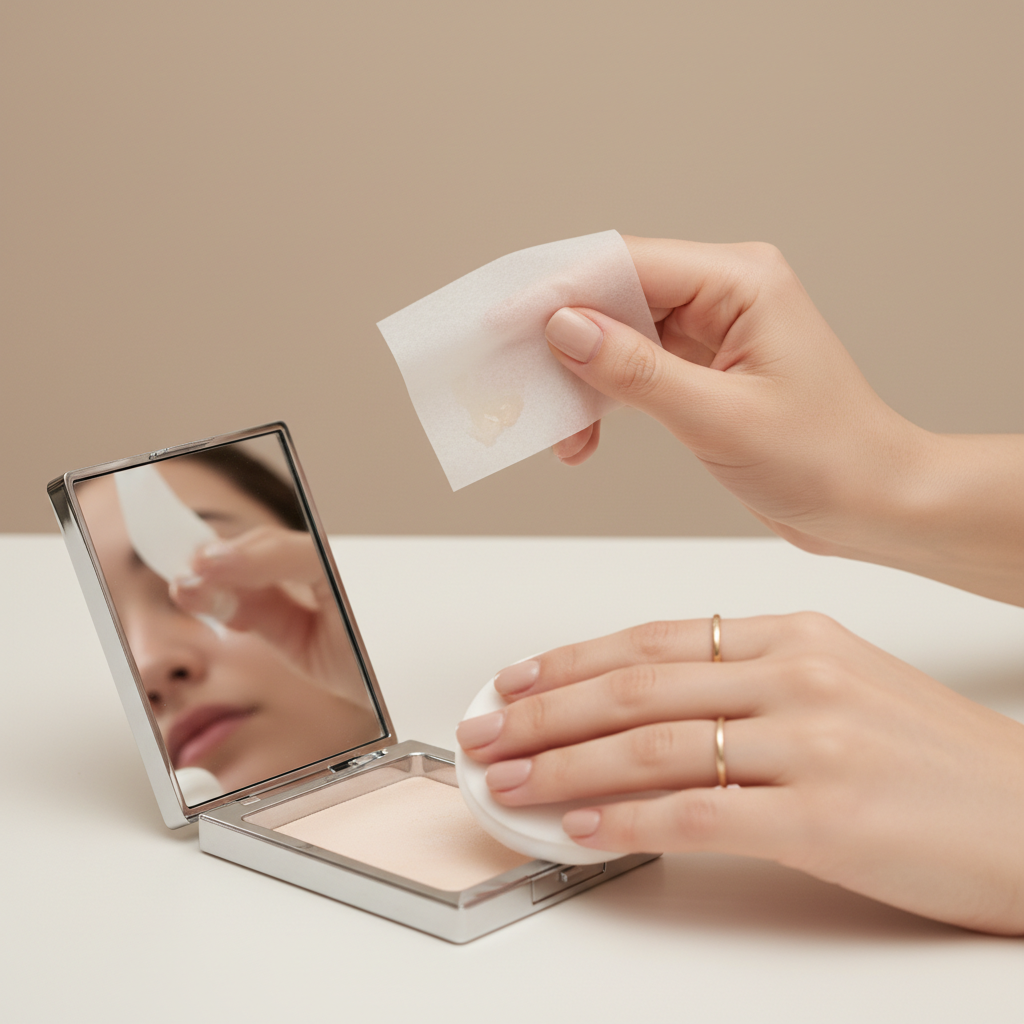
- Blot with blotting paper or a clean tissue, press gently.
- Mist lightly if you look tight or powdery, give it 20–30 seconds.
- Spot-powder only where you get shiny, use a puff to press.
- Avoid adding more foundation unless there’s actual missing coverage; if needed, tap a tiny amount only on the broken-up spot.
If you’re in a humid city or you wear a mask, you may need more frequent blotting, but the same sequence still holds.
Key takeaways (so you can actually do this tomorrow)
- Thin layers last longer than thick layers, especially on oily skin.
- Let skincare and sunscreen set, rushing is a hidden reason makeup slips.
- Use primer only where you need it, not as a full-face default.
- Press powder into the T-zone, then sweep excess; don’t “bake” unless you truly like that finish.
- For how to make makeup last all day oily skin, touch-ups should start with blotting, not more product.
Conclusion: a simple routine that stays put without feeling heavy
If your base keeps fading, treat it like a layering problem, not a “my skin ruins everything” problem. Keep prep lightweight, match textures, apply less product than you think, and set with intention, not panic.
Pick one adjustment from the checklist and run it for a week, then tweak again. That’s usually how people finally crack how to make makeup last all day oily skin without buying a whole new bag of products.
Next step: tomorrow morning, time your prep, give sunscreen a real set window, and do the blot-then-powder touch-up once. You’ll learn more from that one day than from five new launches.