
How to style layered necklaces comes down to three things most people skip: clean length spacing, one clear “hero” pendant, and a neckline match that doesn’t fight your chain mix.
If your stack keeps tangling, looks busy in photos, or sits awkwardly on a crewneck, it’s usually not the necklaces themselves, it’s the proportions and placement. Layering is one of those styling moves that looks effortless on others, but the rules are quietly doing a lot of work.
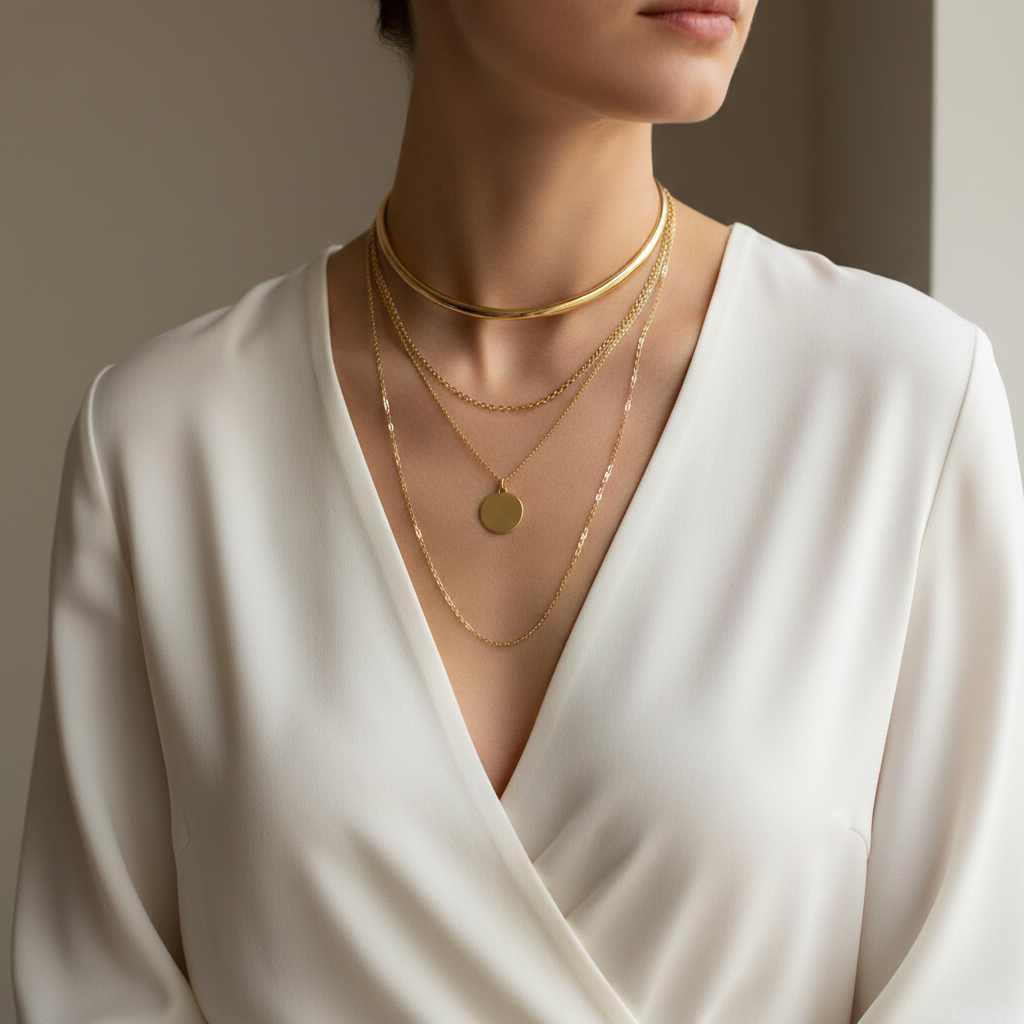
This guide gives you practical formulas, quick self-checks, and outfit pairings so your layers look intentional, not accidental. I’ll also flag the common traps like mixing too many pendants or choosing lengths that collapse into one line.
Get the “length math” right (it solves most layering problems)
The easiest way to make layered necklaces look expensive is simple separation. When pieces sit too close, they twist together and read as one messy cluster.
A solid baseline: aim for 2–4 inches of difference between each necklace. That spacing keeps each chain visible and reduces friction points that cause tangling.
Easy length combinations that usually work
- 14–16" + 18" + 20–22" (classic everyday stack)
- 16" + 20" + 24" (clean, slightly longer and elegant)
- 15" choker + 17–18" + 22–24" (great for open collars and V-necks)
If you’re figuring out how to style layered necklaces for the first time, start with three pieces max. Two can look unfinished, four can work, but only once you know what you’re doing with weight and pendants.
Quick reference table: neckline to necklace lengths
| Neckline | Necklace lengths that tend to flatter | What to avoid |
|---|---|---|
| Crewneck / high neck | 18" + 20–22" + 24" (keep it longer) | Chokers that press into fabric and flip |
| V-neck | 16" + 18" pendant + 20–22" (follow the V) | Pendants that land exactly on the V seam |
| Scoop neck | 14–16" + 18" + 20" (balanced curve) | All chains ending at the same point |
| Button-down collar | 16" tucked inside + 18–20" outside | Too many charms competing with collar points |
| Strapless / sweetheart | 14–16" + 18" pendant + 22" (collarbone focus) | Very long chains that break the open neckline |
Pick a “hero” piece, then build around it
Most stacks look cluttered because every necklace is trying to be the main character. A better approach is to choose one focal point, then make the other pieces supportive.
Use this simple hierarchy:
- Hero: one pendant, locket, charm cluster, or a slightly thicker chain
- Support:
- Anchor:
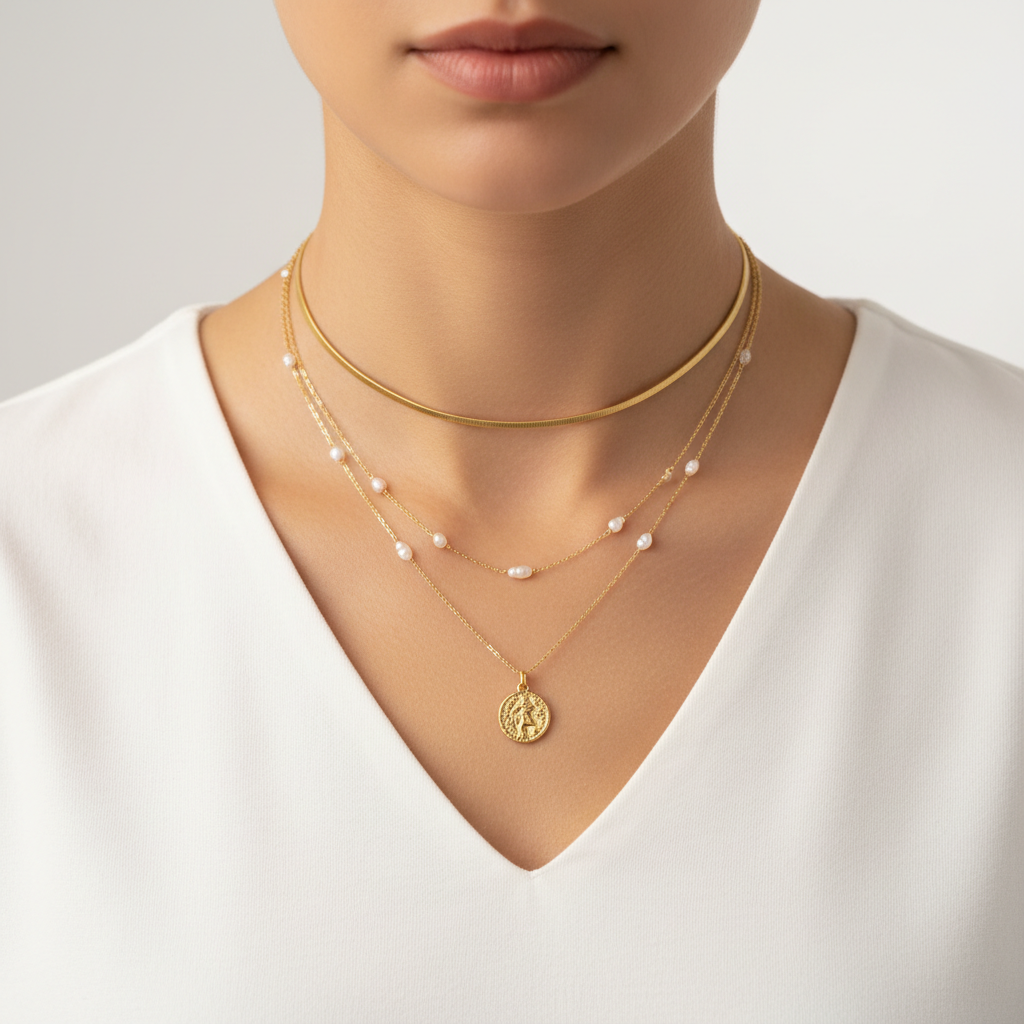
When people ask how to style layered necklaces for work outfits, this “hero + supports” rule is the difference between polished and noisy. Work stacks usually look best with one pendant max and minimal sparkle.
Mix chains like you mean it: texture, thickness, and metal
Layering looks intentional when each chain brings something different. If all three are thin cable chains, the stack can disappear. If all three are chunky, it can feel heavy.
Reliable mixing combos
- One thin + one medium + one slightly chunky (most balanced)
- One smooth (snake/box) + one textured (rope/figaro)
- One pendant + two plain chains (clean and camera-friendly)
Metal mixing is allowed, but keep it controlled. A common approach is two pieces in one metal, one piece in the other. If everything is half-and-half, the look can read random.
According to Gemological Institute of America (GIA), jewelry should be cared for based on its metal and gemstone type, which matters here because layered pieces rub together and wear faster if you treat them all the same.
Do a quick self-check before you leave the house
This is the part people skip, then wonder why their stack looks off in mirrors later. A 20-second check saves you the mid-day re-tangling.
- Spacing: Can you clearly see three separate “lines”?
- Centering: Does the hero pendant sit on your midline?
- Neckline match: Does any chain sit exactly on a seam or collar edge?
- Motion: Turn your head left-right, do pieces twist instantly?
- Hair: If hair is down, will it snag a charm or clasp?
If your stack fails the motion test, adjust lengths first, then simplify pendants. Most “tangle issues” are really “too-similar length issues.”
Practical styling recipes for real outfits
You can know all the rules and still freeze at your jewelry box. These formulas remove the guesswork.
Recipe 1: Everyday tee or tank
- 16" thin chain
- 18" small pendant
- 22" paperclip or rope chain
Key point: keep pendants small so the tee stays casual, not costume-y.
Recipe 2: Button-down for office
- 16" chain under the shirt (subtle shine)
- 18–20" pendant outside
Key point: leave the collar open enough so the pendant has space, otherwise it gets trapped and tilts.
Recipe 3: Date night or going out
- 14–15" choker (simple)
- 18" statement pendant or lariat
- 22–24" minimal chain
For how to style layered necklaces with a dress, this is where you can push contrast. Just keep one piece sleek so it doesn’t become three competing statements.
How to prevent tangling and clasp chaos (without buying gadgets)
Tangling happens when chains share the same drop point, or when a heavier piece drags a lighter one during movement. You can reduce it a lot with setup.
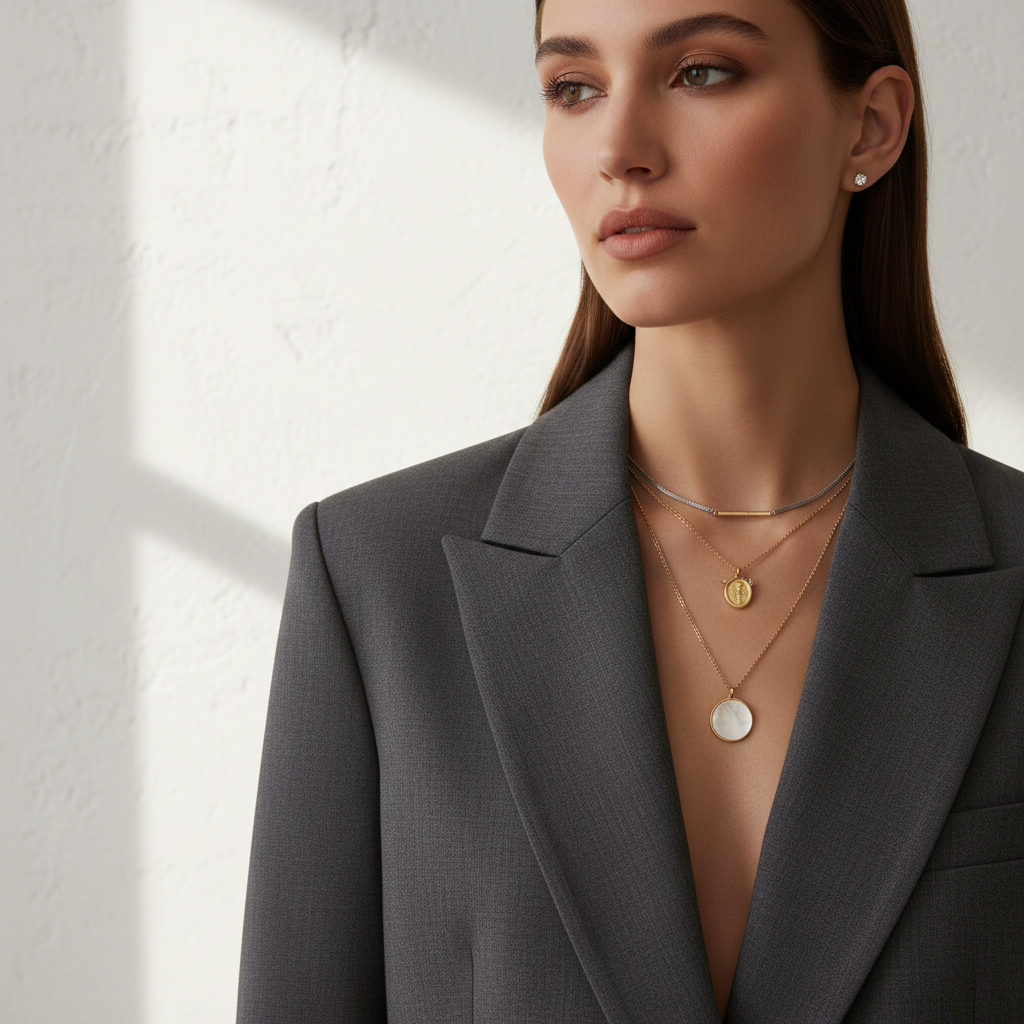
- Stagger lengths: again, 2–4 inches matters more than people think
- Heaviest chain goes shortest: it’s more stable near the neck
- Keep pendants on only one layer: multiple pendants bump and rotate
- Close clasps fully: partially closed clasps catch other links
- Use a single metal family when possible: similar hardness reduces weird snags
If you still tangle daily, a layering clasp can help, but it’s not magic. It works best when lengths are already spaced well.
Common mistakes that make layers look “off”
These are the mistakes I see most, and they’re fixable without buying new jewelry.
- All chains end at the same spot: everything collapses into one visual line
- Too many meaningful pendants at once: the eye has nowhere to rest
- Wrong scale for body + outfit: tiny chains on a chunky sweater get lost, chunky chains over a delicate cami can overwhelm
- Mixing too many motifs: hearts + pearls + coins + initials can feel like a charm bracelet moved to your neck
- Ignoring your neckline edge: chains caught on a collar read messy, not “styled”
If you’re stuck, simplify down to two layers, get the spacing right, then add the third back. That’s usually faster than endlessly swapping pieces.
When it’s worth asking a jeweler for help
Most layering issues are styling, not repair, but sometimes hardware is the real problem. If a chain keeps twisting even with good spacing, it may have a worn clasp, a kinked link, or a pendant bail that pulls sideways.
According to American Gem Society (AGS), regular professional inspection can help spot wear on clasps and settings before they become bigger problems. If you’re layering daily, that extra friction can speed up wear.
If you have metal sensitivities, irritation around the neck can happen with certain alloys or plating. In that situation, it’s reasonable to ask a jeweler or a medical professional for guidance, especially if symptoms persist.
Key takeaways (so you can style faster tomorrow)
- Spacing beats price: 2–4 inches between layers makes stacks look intentional
- One hero piece: pick one focal necklace, keep the rest supportive
- Match neckline: avoid chains landing directly on seams and collar edges
- Reduce tangles with setup: stagger length, limit pendants, fully close clasps
If you want a simple next step, pick three necklaces, adjust to clear separation, then take one quick mirror photo. The camera makes proportion problems obvious, and you’ll learn your best lengths fast.
FAQ
How many necklaces should I layer at once?
Two to three is the sweet spot for most outfits. Four can work, but it usually needs stronger length spacing and simpler pendants so it doesn’t look crowded.
How do I style layered necklaces with a turtleneck?
Go longer and cleaner: think 20–22" plus 24" or longer so the necklaces sit on the fabric without bunching at the neck. Avoid tight chokers over thick knits since they can flip and feel uncomfortable.
Can I mix gold and silver layered necklaces?
Yes, it often looks modern. Keep it controlled by making one metal dominant, then add one contrasting piece, and try to repeat that contrast elsewhere like a ring or watch so it feels intentional.
Why do my layered necklaces keep tangling even with different lengths?
Usually it’s weight balance or hardware. A heavier, longer chain can pull a lighter one into it, and certain link styles twist more easily. Try placing the heavier chain shorter, and limit pendants to one layer.
What’s the easiest formula for beginners learning how to style layered necklaces?
Start with 16" + 18" pendant + 22" chain. It works on many necklines, reads clearly in photos, and gives you room to adjust up or down based on your outfit.
Should layered necklaces match my earrings?
They don’t need to match exactly. In many cases, small studs or simple hoops let the necklace stack be the focus, while big statement earrings pair better with fewer necklace layers.
Do layering clasps actually work?
They can reduce clasp mess and help keep spacing, but they won’t fix layers that are nearly the same length or chains that twist by design. Think of them as a helper after you nail proportions.
Want a simpler way to build a stack?
If you’re trying to style a layered look without buying a pile of random pieces, it can help to start from one hero necklace you already love, then add two basics in separated lengths. If you’d rather skip the trial-and-error, look for sets designed with built-in spacing so you can get a clean stack with less tweaking.