
How to fold clothes to save space comes down to two things, reducing bulk and making each item easy to grab without messing up the stack.
If your drawers won’t close, your closet shelves avalanche every time you pull out a T-shirt, or you keep “forgetting” clothes because they’re buried, folding is usually the quiet culprit, not the size of your home.
The good news is you don’t need a fancy organizer system to see a difference, you need a couple of reliable folds that match how you store clothes, plus a few habits that keep the results from unraveling by day three.
Below is a practical playbook, choose the methods that fit your space and your patience level, then standardize on them so everything stacks the same way.
Why clothes take up more space than they should
Most “space problems” are really “shape problems”, folded items become uneven lumps, then you compensate by stacking higher, and the whole pile slumps into wasted air pockets.
- Inconsistent fold sizes create leaning stacks and dead space on the sides of drawers.
- Over-thick folds happen when seams and waistbands get folded into the middle, so each item becomes a brick.
- Stacking for height instead of visibility makes you pull from the middle, which collapses the pile.
- Wrong storage match, for example, a “flat stack” works on shelves but fights you in deep drawers.
According to The American Cleaning Institute, simpler, repeatable routines tend to be easier to maintain over time, which matters because the neatest fold in the world is useless if you won’t keep doing it.
Quick self-check: which storage style fits your space?
Before you refold everything, pick the style that matches how you store and how you reach.
- Deep drawers: file folding or rolling, so you can see items from above.
- Shallow drawers: classic flat fold works, height is limited anyway.
- Shelves: flat stacks with consistent width, or bins to stop slumping.
- Suitcase / gym bag: rolling, because it packs around edges and reduces shifting.
- Hanging space available: hang bulky or crease-prone items, fold the rest smaller.
If you’re trying to figure out how to fold clothes to save space and you keep redoing drawers every week, that’s usually a sign you need more visibility (file fold) rather than tighter stacks.
Best folding methods (and when to use each)
There’s no single “right” fold, but there are a few that work in most American closets and standard dresser drawers.
1) File fold (vertical folding) for drawers
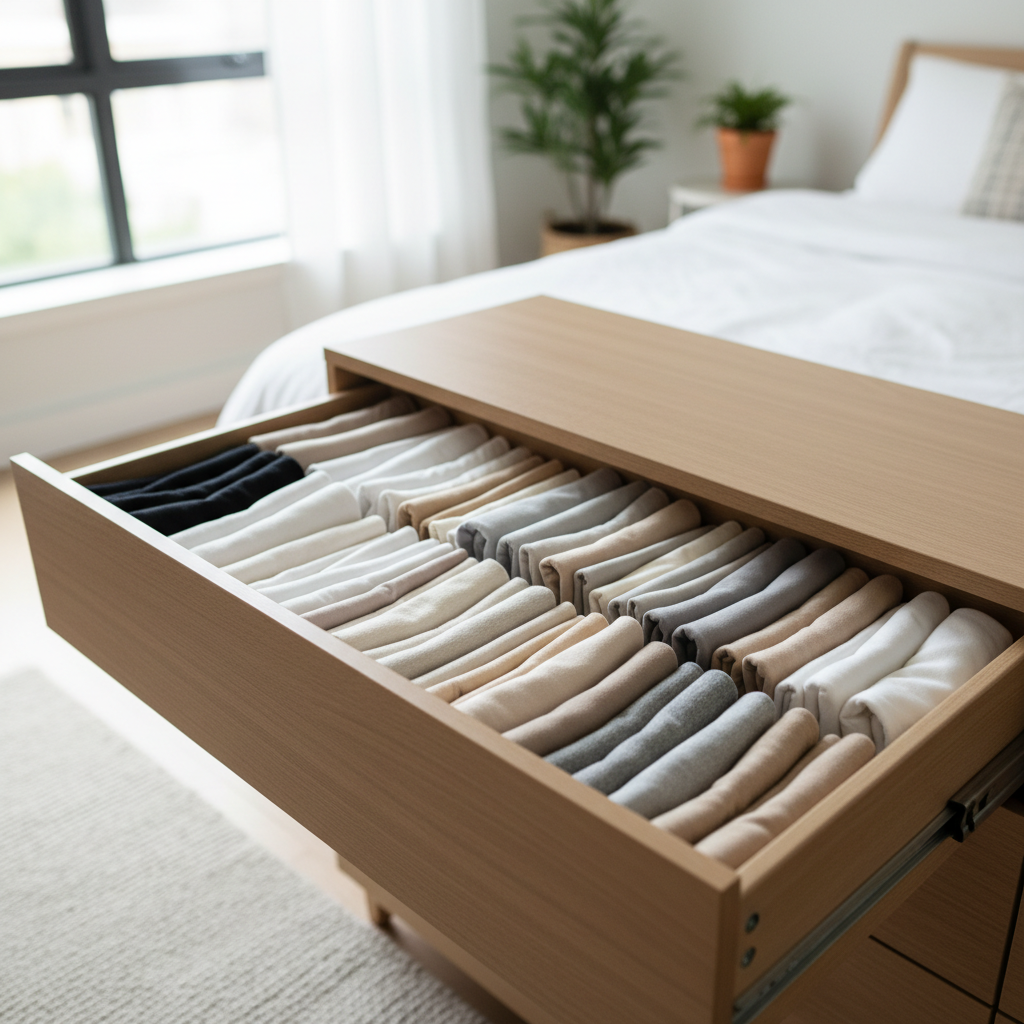
File folding stores clothes upright like folders in a cabinet, you trade “stack height” for “instant visibility”.
- Lay the item flat, smooth major wrinkles with your hands.
- Fold sides inward to create a rectangle roughly the width of your drawer section.
- Fold in half, then in thirds until it stands on its own.
- Place items upright, packed closely enough to support each other.
Works best for T-shirts, pajamas, shorts, leggings, workout tops, kids clothes, and anything you want to see at a glance.
2) Ranger roll for travel and tight drawers
This roll is tighter than a casual roll and can reduce “unrolling” in a drawer.
- For shirts, tuck the bottom hem up a couple inches to form a small cuff.
- Fold sides in, roll from the collar down tightly.
- Wrap the cuff over the roll to lock it in place.
If you’re packing, this is one of the most reliable ways to keep bundles compact without compression bags.
3) Classic flat fold for shelves
On shelves, the goal is clean edges and consistent width, not extreme compression.
- Fold into a neat rectangle with aligned edges.
- Keep the thickest parts (waistbands, seams) near the outside edges instead of the center.
- Limit stacks to a height you can lift as one unit, many people find 6–10 items manageable.
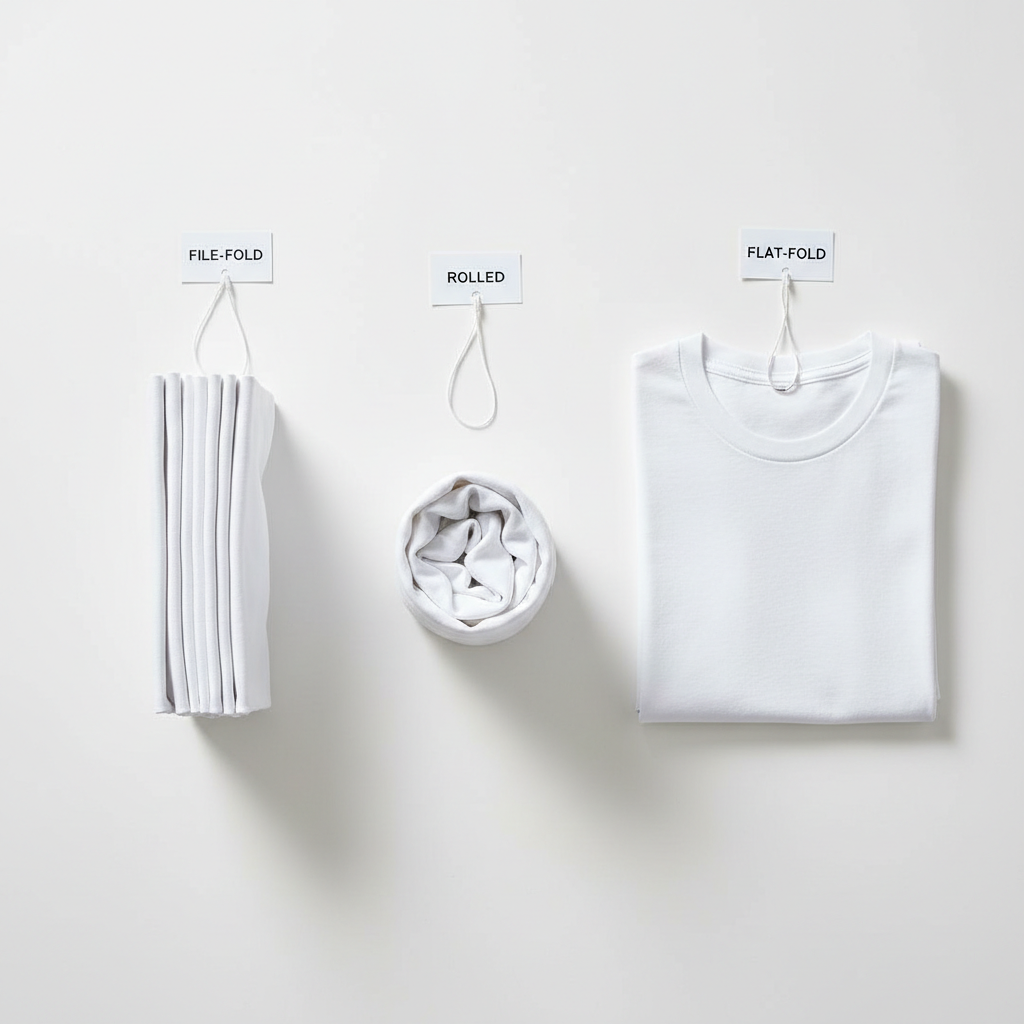
If you only adopt one method, file folding tends to deliver the biggest “space feels bigger” effect in drawers because it stops the constant re-stacking cycle.
Step-by-step: how to fold common items to save space
These are the pieces that usually clog drawers and make closets feel crowded.
T-shirts and casual tops (drawer-friendly)
- Use a file fold, aim for a uniform rectangle width across all shirts.
- For thicker tees, fold in thirds (not halves) so the bundle stands up without bulging.
Jeans and heavy pants (reduce the “waistband brick”)
- Fold in half lengthwise, align seams.
- Fold from hem toward waistband, stop before the thick waistband area.
- Fold the waistband over last, keeping bulk on the outside edge.
Leggings and thin lounge pants (easy wins)
- Fold in half lengthwise, then into thirds for file folding.
- If they slide around, roll them and line up rolls tightly.
Sweaters and hoodies (often better off not in a drawer)
- Fold loosely to avoid stretching shoulder seams.
- Use a shelf stack or a bin, and don’t chase ultra-tight folds that create hard creases.
- If drawer space is limited, consider hanging only if the material won’t stretch, when unsure, shelf storage is usually safer.
Underwear and socks (stop the “tiny item chaos”)
- Underwear: small file folds work well, keep them upright so you can pick one.
- Socks: avoid stretching elastic by balling too tightly, fold into a flat pair or a gentle roll.
Which method saves the most space? A quick comparison table
Real-world results depend on fabric thickness and drawer dimensions, but this helps you choose without overthinking.
| Method | Best for | Space savings | Ease | Grab-and-go |
|---|---|---|---|---|
| File fold | Drawers, daily basics | High (less wasted air) | Medium | High |
| Ranger roll | Travel, tight bins | Medium to high | Medium | Medium |
| Flat fold | Shelves, sweaters | Medium | Easy | Low to medium |
| Hang | Wrinkle-prone items | Varies by closet | Easy | High |
Make it stick: a simple drawer setup that stays tidy
Folding solves half the problem, the other half is keeping items from slumping into open space.
- Set a “standard width” for each drawer section, your folds should match that width even if it means slightly looser folds.
- Use dividers or small bins for underwear, socks, gym gear, and swimwear, otherwise they migrate.
- Store by category, then color if it helps you spot what you own, visibility reduces re-buying basics.
- Leave 10–15% breathing room so you can remove one item without yanking the whole row.
When people ask how to fold clothes to save space, they often focus on tighter and tighter folds, but the bigger win is structure, the row stays upright so your “system” survives busy mornings.
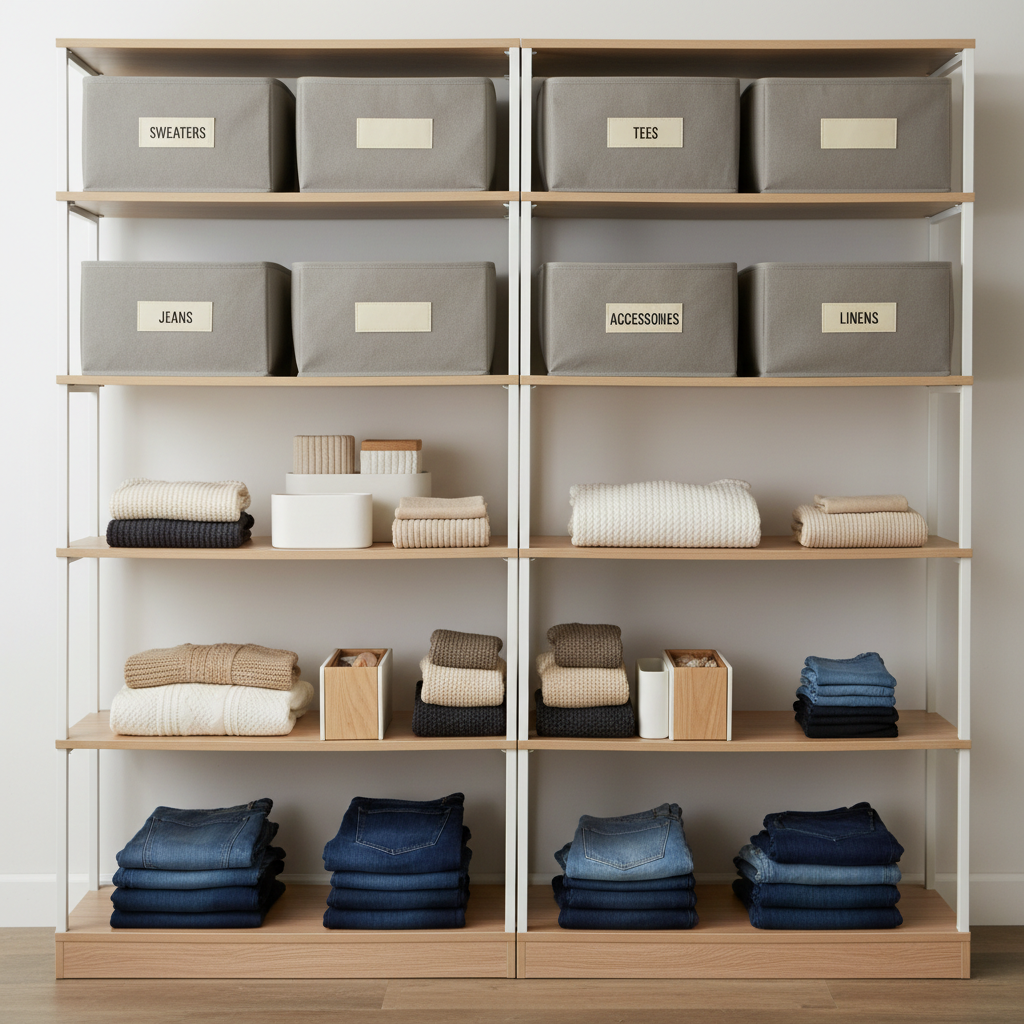
Key takeaways: pick one fold style per storage type, keep dimensions consistent, and build light structure with dividers so stacks don’t collapse.
Common mistakes that waste space (even with “good” folding)
- Overstuffing drawers, it feels efficient, but it creates friction so you stop putting clothes away properly.
- Mixing thick and thin items in the same row, the tall items tip and the row falls over.
- Folding everything the same way, hoodies, denim, and silk tops don’t behave the same in stacks.
- Chasing perfect creases, it slows you down, and speed matters if you want habits to stick.
According to CDC guidance on home safety, keeping floors and walkways clear reduces trip hazards, if clothing piles end up on the floor because storage is frustrating, simplifying storage can be part of keeping rooms safer.
When it makes sense to get extra help (or change the storage, not the fold)
If you’re consistently running out of room even after learning how to fold clothes to save space, the issue may be volume, not technique.
- Frequent overflow: consider seasonal rotation bins, vacuum bags for long-term storage, or donating items you don’t wear.
- Persistent wrinkles: hanging or garment bags may suit your wardrobe better than aggressive folding.
- Physical limitations: if bending, lifting stacks, or repetitive motions cause pain, a professional organizer or an occupational therapist can suggest lower-effort setups.
- Pest or moisture concerns: use sealed bins and address humidity, if you see mold or suspect allergies, consider consulting a qualified professional.
Practical “do this today” plan (15–30 minutes)
If you want results without turning your bedroom into a weekend project, focus on one drawer.
- Pick the drawer you open most, usually T-shirts or workout gear.
- Empty it, wipe the bottom, and decide: file fold or roll.
- Refold only that category to a consistent width, stand items upright, pack them snug.
- Add one small bin for socks or underwear if they share the drawer.
- Stop when the drawer closes easily, don’t try to cram “just one more thing”.
Once one drawer feels effortless, copy the same pattern elsewhere, that’s how small changes become a system instead of a one-time cleanup.
Conclusion: save space by folding for visibility, not just tightness
The most reliable way to reclaim room is to fold so you can see everything and remove one item without destroying the rest, file folding for drawers and smart flat stacks for shelves usually cover most closets.
If you want one action step, refold your most-used drawer into upright rows and set a consistent width, you’ll feel the difference the next morning when getting dressed takes less digging.