
how to do messy bun for long hair comes down to two things, grip and shape, because long hair is heavier, slicker, and more likely to slump after 20 minutes.
If your bun keeps sliding, looks tiny, or turns into a tight topknot that feels “too done,” you’re not doing anything wrong, you’re just missing a couple of small setup choices that make long hair behave.

This guide walks you through a few reliable messy-bun methods, plus quick diagnostics when the bun collapses, looks lopsided, or feels too tight. You’ll also get a simple product and tool checklist, because the right elastic matters more than most people think.
Why messy buns are trickier on long hair
Long hair usually fails in a messy bun for practical reasons, not “lack of skill.” Once you see what’s happening, the fixes feel obvious.
- Weight pull: longer lengths tug the bun downward, especially if the base ponytail sits on a slippery spot of your head.
- Low friction: freshly washed hair or very straight hair can let pins and elastics slide.
- Too much hair in one coil: packing all length into one wrap often creates a dense knot that either droops or looks like a perfect ballet bun.
- Wrong elastic: thin elastics stretch out fast, thick hair needs a stronger hold that doesn’t cut into strands.
According to the American Academy of Dermatology Association, tight hairstyles that pull on hair can contribute to traction-related breakage and hair loss, so the goal is a bun that holds without feeling like it’s yanking at your scalp.
Quick self-check: which messy bun problem do you have?
Before you redo everything, figure out what’s actually going wrong. Pick the closest match and use the fix in the next sections.
- Bun slips down within an hour: base is too smooth, or pins have nothing to grab.
- Bun looks small even with lots of hair: you’re wrapping too tightly, or hiding volume inside the coil.
- Bun looks lumpy at the scalp: ponytail base isn’t clean, or you’re twisting unevenly.
- Bun feels tight or gives a headache: elastic placement or over-twisting is creating tension.
- Ends poke out everywhere: you need a second “tuck step” or a different pinning pattern.
The classic 60-second messy bun (best everyday option)
This is the version most people mean when they search how to do messy bun for long hair, it’s fast, forgiving, and still looks intentional.
What you need
- 1 thick, fabric-covered elastic or a strong coil elastic
- 4–8 bobby pins (choose pins close to your hair color)
- Optional: texturizing spray or dry shampoo for grip
Steps
- Gather hair into a ponytail where you want the bun to sit, for most people, slightly above the occipital bone (the bump on the back of your head) holds better than very high crown placement.
- On the final elastic wrap, pull hair through only halfway to create a loop, keep the tail ends out.
- Split the loop lightly with your fingers, then tug small sections to “mess it up” and widen the bun shape.
- Wrap the loose tail around the base once, then tuck ends under the elastic.
- Pin in a cross pattern, insert pins toward the center of the bun, not straight down, so they anchor into the base.
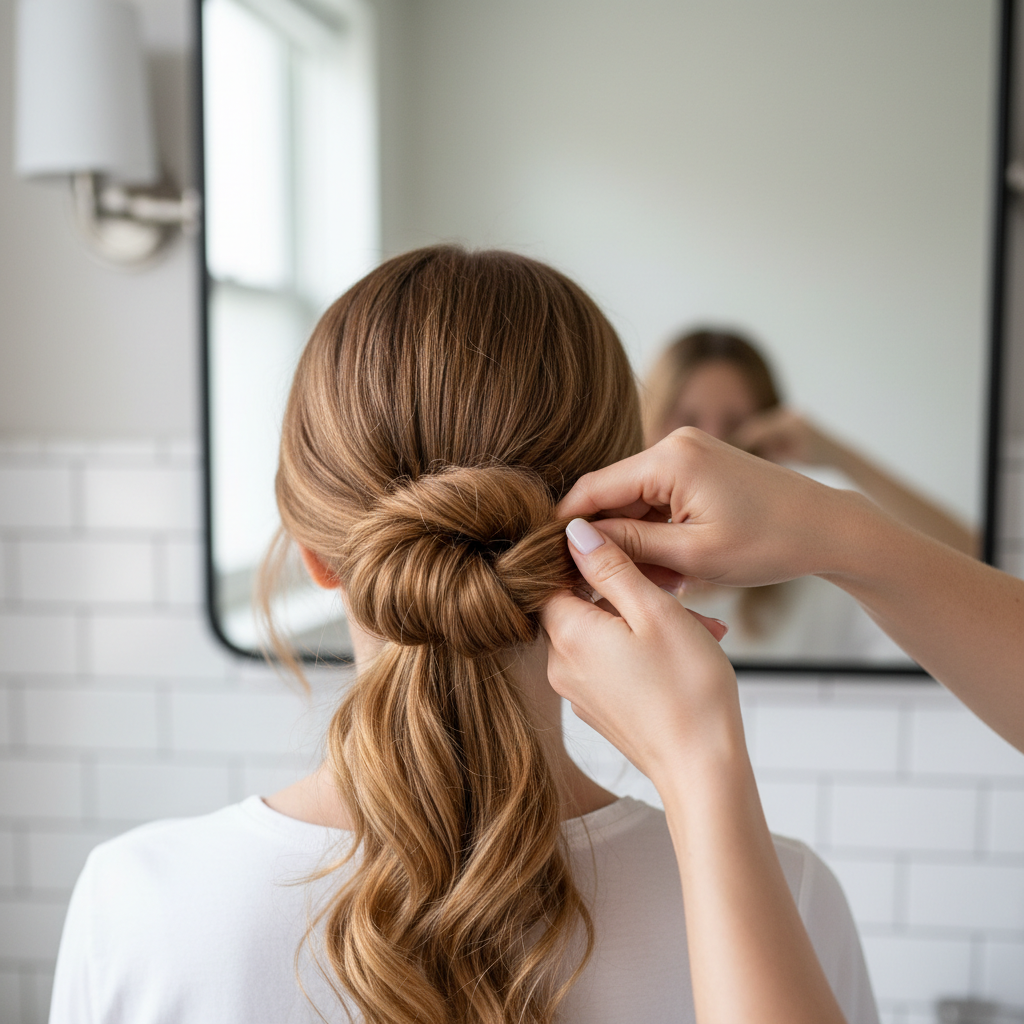
If your hair is very long, don’t try to hide all length inside the first loop, let the bun be wider, not tighter, then control the leftover tail with one wrap and pins.
Three messy bun methods, compared (choose by hair type and vibe)
People get stuck because they keep using one method for every day. It’s easier when you match the technique to your hair texture and the look you want.
| Method | Best for | Pros | Watch-outs |
|---|---|---|---|
| Looped ponytail bun | Most long hair, casual wear | Fast, easy volume | May slip on ultra-silky hair without texture |
| Twist-and-wrap bun | Thick hair, heavy length | Strong hold, cleaner outline | Can feel tight if you over-twist |
| Claw-clip messy bun | Fine hair, quick errands, low tension | Scalp-friendly, fast redo | Clip size matters, too small will pop open |
Stronger hold: twist-and-wrap messy bun for very long or thick hair
If your bun always falls, this version usually lasts longer because the structure supports itself.
- Make a ponytail, but don’t pull it super tight, snug is enough.
- Twist the ponytail once or twice until it starts to rope, stop before it turns stiff.
- Wrap the rope around the base, keep wraps slightly loose to build a bigger bun.
- Tuck the ends under the bun, then pin the bun edge to the base in 4 points, think north, south, east, west.
For a messier finish, pull out two thin face-framing pieces and loosen the bun edge in small pinches rather than yanking one big section.
Grip hacks: make long hair “stick” without making it crunchy
When someone says how to do messy bun for long hair and make it stay, they’re often dealing with hair that feels too soft or too clean. A little grip goes a long way.
Light texture options that usually help
- Dry shampoo at the roots: adds friction at the base so elastics and pins hold.
- Texturizing spray on mid-lengths: helps the bun look fuller and less slippery.
- Backcombing just the ponytail base: 3–4 quick strokes, then smooth the top layer with fingers.
Pinning details most people miss
- Use bobby pins with the wavy side down, it usually grips better.
- Don’t pin only the bun surface, slide pins so they catch hair from the base ponytail.
- For extra security, “lock” two pins by crossing them in an X at the bun base.
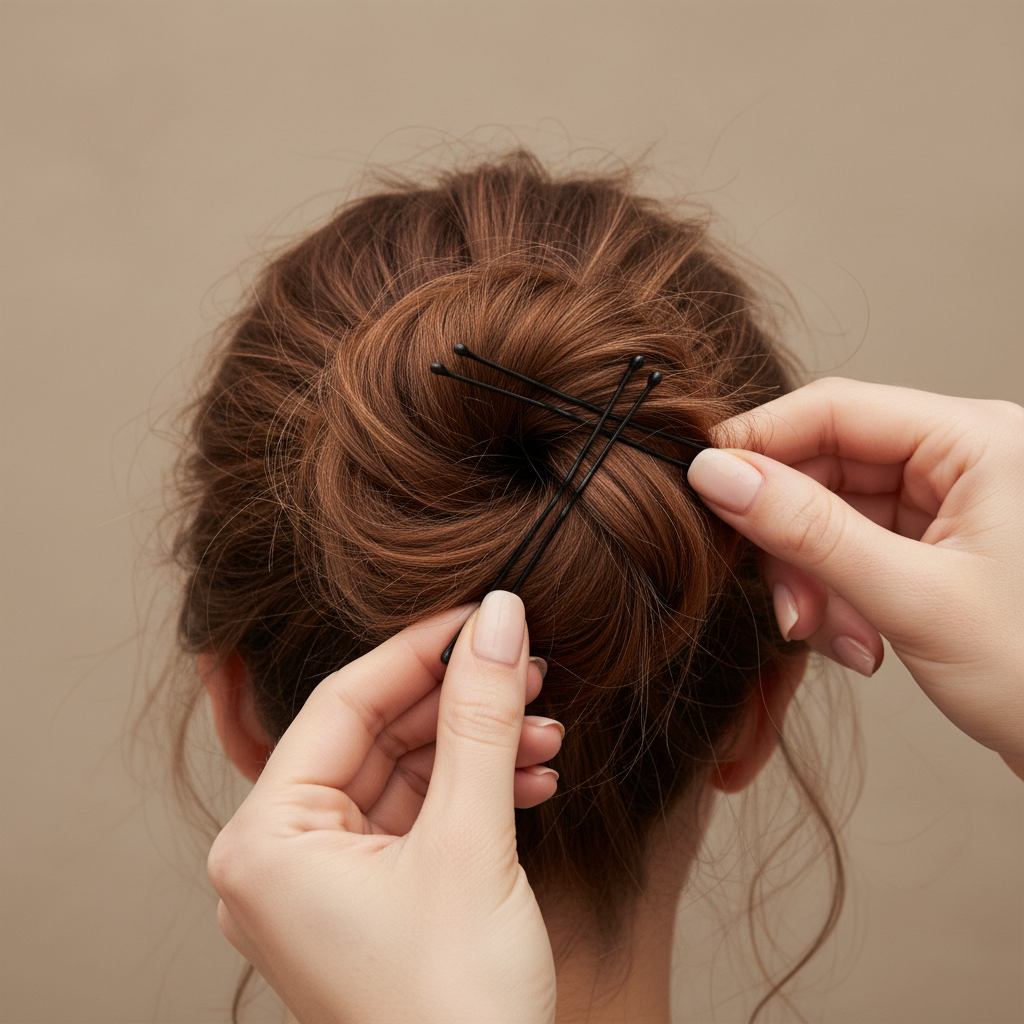
If your scalp feels sensitive, skip aggressive teasing and rely on dry shampoo plus better pin angles, the bun can still look airy without pulling.
Common mistakes that make a messy bun look “off”
- Over-tight ponytail: creates a harsh bump and makes the bun feel heavy, loosen the base slightly with your fingertips.
- One giant twist: turns the bun into a hard knot, keep twists minimal and build volume by fanning the bun edge.
- Too many tiny pins: a few well-placed pins beat a dozen random ones, too many pins can flatten texture.
- Shiny finishing spray too early: can make hair slippery, add shine only after the bun holds.
- Trying to hide every flyaway: a messy bun needs a little imperfection, aim for “styled messy,” not “frantic smooth.”
Key takeaways (save this for your next bun)
- Build the bun from a stable base, slightly higher than “low bun” placement often holds best on long hair.
- Volume comes from loosening the loop and edges, not from twisting tighter.
- Grip beats strength, a touch of texture and correct pin direction usually fixes slipping.
- Comfort matters, if it pulls, adjust, long hair can stress roots when styles stay too tight.
Wrap-up: a messy bun that actually lasts
how to do messy bun for long hair is less about a perfect technique and more about choosing a method that matches your hair’s texture, then using pins like anchors instead of decoration.
Next time, try the looped ponytail bun first, add light texture if your hair feels too soft, then pin into the base with a cross pattern, you’ll usually get a bun that stays put and still looks relaxed.
If you notice repeated breakage around your hairline or tension headaches, consider loosening your styles and, if needed, checking with a dermatologist or licensed stylist for safer options that fit your hair and scalp.