
How to style a blazer for work comes down to three things you can control fast: fit, fabric, and what you pair underneath.
If your blazer feels “off,” it usually isn’t because blazers are tricky, it’s because one detail is fighting your workplace dress code, your body proportions, or your day-to-day comfort.

This guide focuses on realistic work outfits, not runway styling. You’ll get a quick checklist to diagnose what’s not working, a table of outfit formulas, and practical tweaks for different office cultures.
Start with the “work blazer” baseline: fit, fabric, and finish
Before outfits, you need a blazer that behaves at 9 a.m. and still looks sharp at 4 p.m. A great blazer can carry simple basics, a flimsy one makes even expensive pieces look messy.
- Fit: Shoulder seams sit at your shoulder bone, sleeves end near the wrist, and the torso closes without pulling. If the lapel bows or buttons strain, sizing or tailoring matters.
- Fabric: For offices, midweight wool blends, ponte, or structured cotton tend to hold shape and resist wrinkling. Linen looks great but reads more casual and creases fast.
- Finish: Smooth lining, clean buttons, and crisp lapels signal “work.” Shiny cheap buttons or limp collars often signal “afterthought.”
According to the CFDA (Council of Fashion Designers of America), fit and quality construction are key markers of a garment’s longevity, and blazers are a classic example where tailoring can extend wear across seasons.
Quick self-check: why your blazer outfits feel awkward
If you keep asking how to style a blazer for work, you may be stuck in one of these common traps. Pick the closest match, then fix that first.
- It looks boxy: blazer too long, shoulders too wide, or pairing with wide pants plus bulky shoes.
- It looks “trying too hard”: heavy contouring of the outfit, loud prints, or too many statement pieces at once.
- It feels tight when you move: armholes too low, sleeves too narrow, or fabric with no give.
- It looks too casual: slouchy knit tee, distressed denim, overly sporty sneakers, or linen wrinkles.
- It reads too formal: high-contrast suit set, shiny fabric, or very structured blazer with a stiff button-up.
A lot of people try to “fix” this by buying more blazers. Often the faster solution is hemming sleeves, swapping the top, or choosing different shoes.
Outfit formulas that work in most US offices (with a table)
These formulas keep decision fatigue low. Build 2–3 go-to combinations, then rotate color and fabric to keep them feeling fresh.
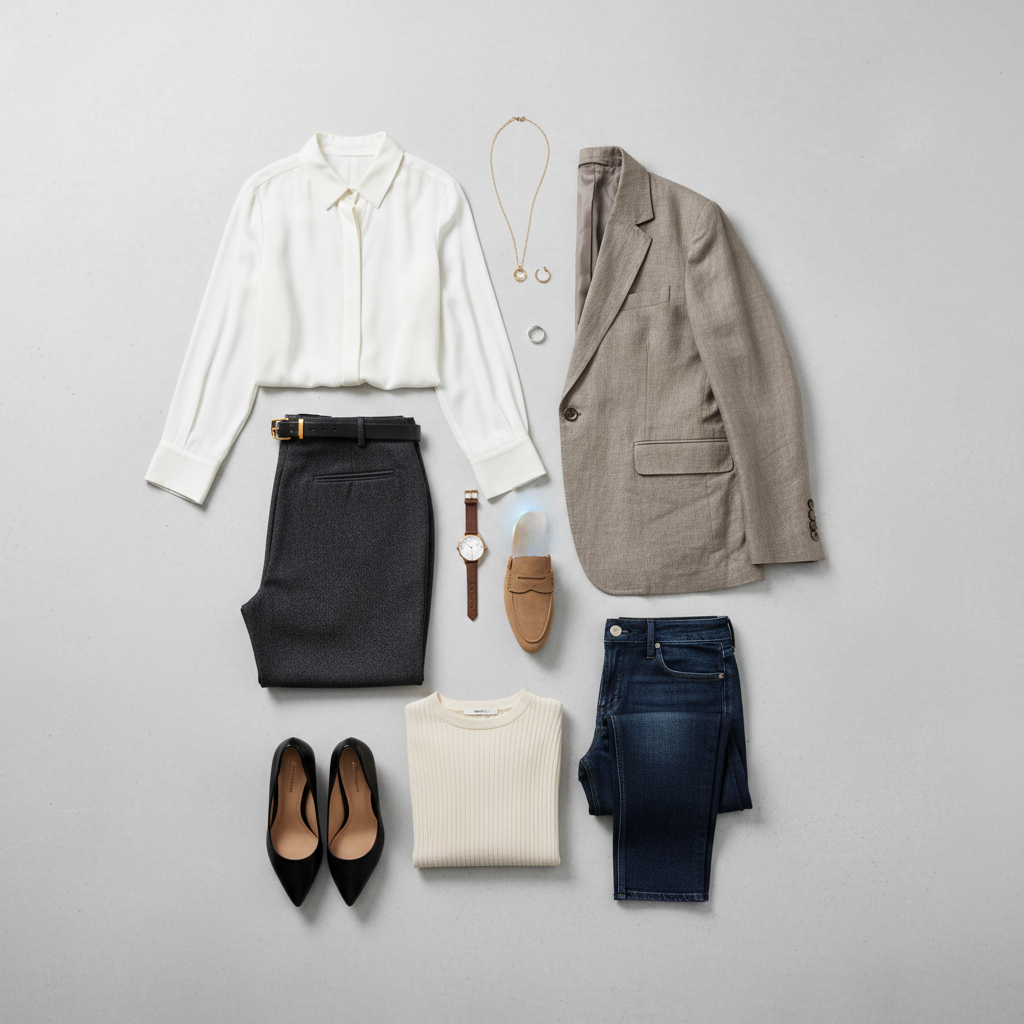
| Work setting | Blazer pairing | Bottom | Shoes | Why it works |
|---|---|---|---|---|
| Business professional | Blazer + silky blouse | Matching trousers or pencil skirt | Pumps or sleek flats | Clean lines, minimal texture clash |
| Business casual | Blazer + fine-gauge knit | Ankle trousers | Loafers or block heels | Polished but comfortable for long days |
| Smart casual / creative | Blazer + fitted tee | Dark straight-leg jeans | Minimal sneakers or loafers | Relaxed base, blazer adds authority |
| Client-facing days | Blazer + tonal top | Tailored trousers | Closed-toe shoes | Low-risk, camera-ready, reads intentional |
Key point: If the blazer is structured, keep the under-layer smoother. If the blazer is relaxed, sharpen the rest with cleaner pants and shoes.
Color and proportion tricks that make you look instantly more “put together”
This is where outfits stop feeling random. A few small choices create a long, clean silhouette, especially in office lighting and Zoom framing.
- Tonal dressing: navy blazer + blue top + dark denim, or camel blazer + cream knit + tan trousers. Less contrast often reads more elevated.
- Use one “anchor neutral”: black, navy, gray, camel, or ivory, then repeat it in shoes or belt.
- Mind the hem breaks: cropped blazer + high-rise trousers lengthens legs; long blazer + slim bottom avoids bulk.
- Keep the neckline intentional: V-neck knit, open collar, or crew neck with a necklace. Random necklines can make the blazer feel borrowed.
If you’re petite, long blazers can still work, but hemming sleeves and choosing a higher-rise bottom usually matters more than chasing a “petite-only” label.
Details that decide “work appropriate”: tops, shoes, and accessories
When people search how to style a blazer for work, they often focus on the blazer, but the supporting pieces do most of the signaling.
Under the blazer: what reads professional without feeling stiff
- Silky blouse: great for meetings, avoid overly sheer fabrics unless you layer.
- Fine-gauge knit: the MVP for business casual, looks smooth and stays comfortable.
- Button-up shirt: works, but sizing matters; too tight creates bunching at armholes.
- Fitted tee: best in creative or casual offices, keep it clean, opaque, and logo-free in many settings.
Shoes: the fastest dial for formal vs casual
- Pumps or pointed flats: instantly more formal, helpful for presentations.
- Loafers: smart, comfortable, and very current in US offices.
- Minimal sneakers: can work in casual workplaces, keep them crisp and simple.
Accessories: keep them “edited”
A blazer already has structure, so accessories work best when they’re deliberate. A belt, small hoops, a watch, or a simple pendant usually beats piling on multiple statement items.
Real-world styling scenarios (and what to do on busy mornings)
Here are quick “if this, then that” swaps. They’re practical because they don’t require a full outfit overhaul.
- If your office runs conservative: choose navy/charcoal, add a blouse, pick closed-toe shoes, and keep hemlines and necklines moderate.
- If you commute a lot: wear sneakers for the walk, pack loafers, and pick a wrinkle-resistant blazer fabric.
- If you run warm: swap the blouse for a sleeveless shell, keep the blazer unbuttoned, and avoid heavy polyester.
- If you’re on camera: use solid colors, avoid tight micro-patterns that can shimmer on screen, and add a simple neckline detail.
Busy-morning formula: blazer + knit top + ankle trousers + loafers, then add one “finish” item (belt, structured bag, or small jewelry). Done.
Common mistakes (the stuff that quietly ruins the look)
These are easy to miss because they’re not “wrong,” they just make the outfit feel unintentional.
- Overly long sleeves: even half an inch too long looks sloppy, tailoring is usually inexpensive.
- Collar and lapel collapse: often a sign the blazer needs steaming, better storage, or a fabric upgrade.
- Too many relaxed items at once: oversized blazer + wide pants + chunky sneakers can read weekend, not work.
- Random color pop: one bright item can work, but if it fights your blazer color, the whole look feels noisy.
Also, don’t ignore comfort. If you’re constantly tugging sleeves or adjusting the shoulders, you’ll look less confident even if the outfit is “correct.”
When tailoring or professional help makes sense
If you’ve tried multiple outfits and still feel stuck, a small adjustment can change everything. Tailoring is most worth it when the blazer fits the shoulders and chest, but sleeves or waist need refinement.
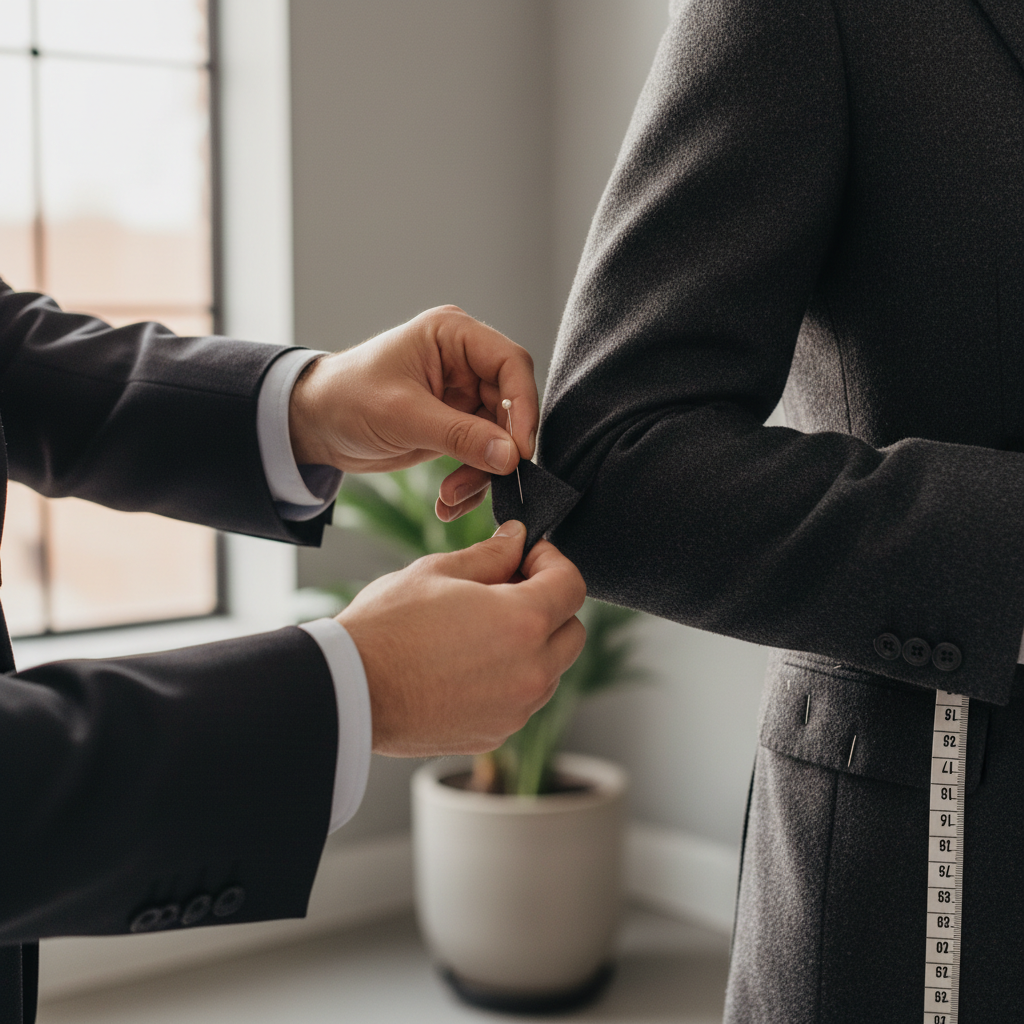
If your workplace has a strict dress policy, or you’re styling for interviews and high-stakes client meetings, a stylist or a trusted sales associate can help you avoid expensive trial-and-error. If you have sensory issues or mobility needs, it may help to consult a professional who understands adaptive clothing options.
Conclusion: build a small blazer system you can repeat
Once you know how to style a blazer for work in your specific office, it stops being a “what do I wear” problem and becomes a repeatable system. Pick one blazer that fits beautifully, lock in two outfit formulas, and use shoes and tops to shift the vibe.
Action steps for this week: try your blazer with one knit top and one blouse, photograph both in natural light, then tailor the sleeves if either look feels almost-right.
Key takeaways
- Fit beats trends: shoulders and sleeve length do most of the work.
- Use formulas: consistent pairings reduce guesswork and look intentional.
- Shoes set the tone: loafers and pumps read “work” fastest.
- Small tweaks matter: steaming, hemming, and cleaner layers elevate instantly.